A review of the science: how you can reduce your risk of dementia NOW by getting flu, pneumonia, and shingles vaccines

View Preview

Almost 10% of U.S. adults over 65 have dementia, and another 22% have mild cognitive impairment. However, research is showing that if you treat early signs of mental decline, you may be able to slow down and possibly reverse cognitive decline.

Ilene Naomi Rusk, Ph.D., a Canadian neuropsychologist, functional brain health coach, Founder, and Director of The Healthy Brain Program at the Brain and Behavior Clinic in Boulder, strives to understand the root causes of a person’s psychological and brain health issues. She and a functional medicine team provide a neuropsychological diagnosis and treatment protocol for each patient, from brain training to nutrition. “It’s important to look at the whole person including lifestyle—stress resilience, mood, sleep, nutrition, exercise—and assess a person’s vascular and metabolic risks,” she says.

“We use the same cognitive training used in the FINGER study (Finnish Geriatric Intervention Study to Prevent Cognitive Impairment and Disability) and other studies which found that if you target several lifestyle and physiological factors simultaneously you can reduce your risk of getting dementia. Those include having a healthy gut microbiome, eating more fruits and vegetables, and sleeping well without sleep apnea. Physical activity is important because it increases brain-body communication, is good for strength and coordination, helps circulation, clears toxins, and improves oxygenation of your brain. 

“We need to be challenged every day,” Dr. Rusk adds. “Read new books, learn new crafts, and stretch ourselves so our brains create new neural connections. Social engagement is also one of the pillars shown to protect against dementia. Loneliness is a huge risk factor because it leads to depression and depression can shrink the hippocampus the same way Alzheimer’s does.”

Dr. Elliot Good, DNP, a nurse practitioner and owner of Amavi Integrative Mental Wellness in Niwot is board-certified in psychiatric mental health and adult geriatric primary care. Amavi offers a multidisciplinary approach to treating all types of memory disorders. The team of professionals uses psychotherapy, medications, and care coordination with other physicians to help patients manage their condition and maintain a high quality of life. Dr. Good emphasizes there’s no cookie-cutter approach to help everyone. “A comprehensive plan may include a medication and/or a neurological assessment plan depending on a person’s risk factors so we know where to target our efforts.

“First, we target things to help prevent dementia like exercise, diet, and sleep. We assess hearing and visual impairment, medication load, and alcohol abuse to optimize your well-being as you age. Secondary prevention assesses underlying issues that contribute to dementia such as hypertension, vascular changes in the brain, diabetes, vitamin D and vitamin B deficiencies, depression, social isolation, and anxiety. Then we try to get those things under control.

We have a neuropsychologist who uses the ACTIVE Study approach based on the study done by the National Institute of Aging for early dementia. It was designed to focus on memory, reasoning, and visual processing speed, the three areas that we tend to lose earliest in our 60s, and the things that lead to not being able to live independently. The people in the study saw an immediate improvement over five years, like remembering to take medication and being less likely to have an auto accident or to stop driving.

What can you do now?

  1. Get a flu and pneumonia vaccine. Get a flu and pneumonia vaccine. Research released at the 2020 Alzheimer’s Association’s International Conference found that over a period of years, at least one flu vaccination was associated with a 17% reduction in Alzheimer’s incidence. More frequent flu vaccination was associated with an additional 13% reduction in Alzheimer’s incidence. Vaccination against pneumonia between ages 65 and 75 reduced Alzheimer’s risk by up to 40% depending on individual genes. Interestingly, individuals with dementia have a higher risk of dying (6-fold) after infections than those without dementia (3-fold). The shingles vaccine also reduces risk of Alzheimer’s since there is a link between viruses and neurodegeneration.http://Lehrer S, Rheinstein PH. Vaccination Reduces Risk of Alzheimer’s Disease, Parkinson’s Disease and Other Neurodegenerative Disorders. Discov Med. 2022 Sep-Oct;34(172):97-101. PMID: 36281030; PMCID: PMC9608336.
  2. Eat a whole foods diet. Evidence from observational studies and randomized controlled trials suggest Mediterranean diet, the DASH diet, and the MIND diet help to reduce cognitive decline. The DASH diet emphasizes vegetables, fruits, low or fat-free dairy products, whole grains, fish, poultry seeds, nuts and vegetables, and limits salt, sweets, and red meats. The Mediterranean diet includes little red meat and emphasizes whole grains, fruits and vegetables, fish and healthy fats such as nuts and olive oil. The MIND diet is a hybrid of the Mediterranean and DASH diets.
  3. Drink coffee if you can tolerate it. Research suggests that coffee consumption over a lifetime reduces the risk of developing Alzheimer’s disease, particularly in the elderly. http://Socała K, Szopa A, Serefko A, Poleszak E, Wlaź P. Neuroprotective Effects of Coffee Bioactive Compounds: A Review. Int J Mol Sci. 2020 Dec 24;22(1):107. doi: 10.3390/ijms22010107. PMID: 33374338; PMCID: PMC7795778.
  4. Sweat! Researchers at the University of Eastern Finland followed 2,315 men aged 42-60 years for 20 years as part of the Kuopio Ischaemic Heart Disease Study. Men who reported taking a sauna 4-7 times per week were 66% less likely to receive a diagnosis of dementia than those who only sauna once a week. They were also 65% less likely to receive a diagnosis of Alzheimer’s disease.http://Laukkanen T, Kunutsor S, Kauhanen J, Laukkanen JA. Sauna bathing is inversely associated with dementia and Alzheimer’s disease in middle-aged Finnish men. Age Ageing. 2017 Mar 1;46(2):245-249. doi: 10.1093/ageing/afw212. PMID: 27932366.
  5. Stay socially and mentally active. http://Zhu J, Ge F, Zeng Y, Qu Y, Chen W, Yang H, Yang L, Fang F, Song H. Physical and Mental Activity, Disease Susceptibility, and Risk of Dementia: A Prospective Cohort Study Based on UK Biobank. Neurology. 2022 Aug 23;99(8):e799-e813. doi: 10.1212/WNL.0000000000200701. Epub 2022 Jul 27. PMID: 35896434; PMCID: PMC9484730.

 “We’re learning new approaches to improve cognitive health all the time,” says Dr. Rusk. “We want to help people stay engaged with their lives, their emotional and brain health, and to feel empowered to make positive lifestyle changes. Stay hopeful.”

Barbra Cohn cared for her husband Morris for 10 years. He passed away from younger-onset Alzheimer’s disease in 2010. Afterward, she was compelled to write “Calmer Waters: The Caregiver’s Journey Through Alzheimer’s & Dementia”—Winner of the 2018 Book Excellence Award in Self-Help—in order to help other caregivers feel healthier and happier, have more energy, sleep better, feel more confident, deal with feelings of guilt and grief, and to ultimately experience inner peace. “Calmer Waters” is available at AmazonBarnes & NobleBoulder Book StoreTattered Cover Book Store,  Indie Bound.org, and many other fine independent bookstores, as well as public libraries.
What are you doing for your brain health?

Brain Nutrition

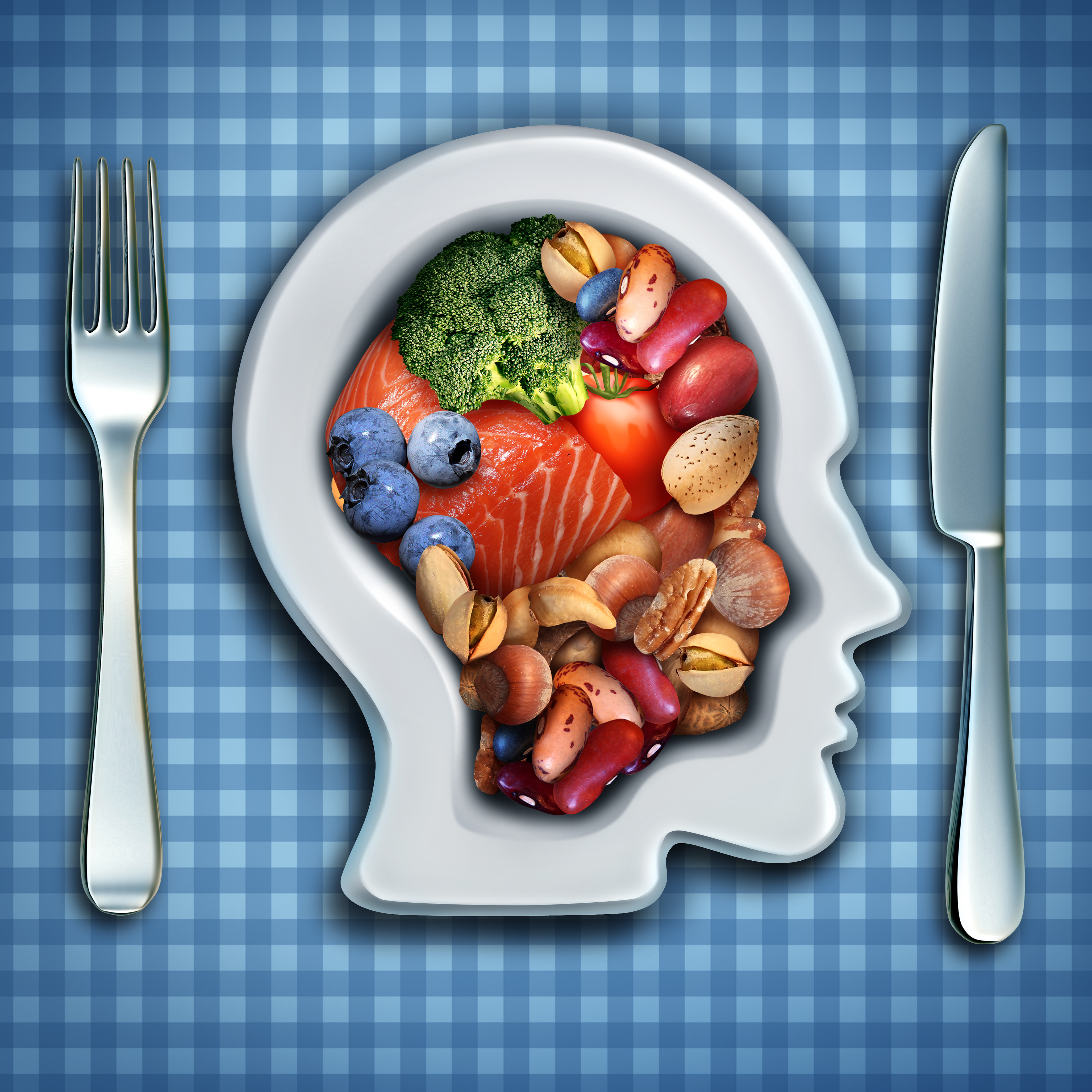
MIND diet includes salmon, beans, greens, nuts, berries

This week is Brain Health Awareness Week, and I’m reposting this piece so you can evaluate your diet and make improvements to support your brain–and heart health. Here’s to your healthy brain and heart!

Have you heard of the MIND diet? It’s the Mediterranean diet and DASH diet slightly remade and combined to form the MIND diet. (MIND is an acronym that stands for the Mediterranean-DASH intervention for Neurodegenerative Delay.)

In a study published in September 2015 in Alzheimer’s & Dementia, the nutritional epidemiologist Martha Clare Morris and her colleagues at Rush University Medical Center borrowed concepts from the Mediterranean diet and the DASH diet. The result is the MIND diet.

The study followed 923 participantsages 58 to 98 years, for an average 4.5 years, and found the MIND diet lowered Alzheimer’s risk by about 35 percent for people who followed it moderately well and up to 53 percent for those who adhered to it rigorously. While more study is needed to better understand the long-term impact of the diet, Morris’s team’s second paper on the MIND diet notes that it’s superior to the DASH and Mediterranean diets for preventing cognitive decline. But it should be noted that high adherence to all three diets may reduce risk of Alzheimer’s disease.

Food to eat on the MIND Diet

  • Green leafy vegetables: a minimum of 6 servings a week (kale, Swiss chard, spinach, collard, etc.)
  • Nuts: a minimum of 5 servings a week (walnuts, pistachios, almonds, cashews, etc)
  • Berries: a minimum of 2 servings a week
  • Beans: a minimum of 3 servings a week (garbanzo, red, black, kidney, white, pinto, etc.)
  • Whole grains: a minimum of 3 servings a day (millet, oats, brown rice, quinoa, wheat berries, etc.)
  • Fish: at least 1 serving a week
  • Poultry (like chicken or turkey): at least twice a week
  • Olive oil as the primary oil used
  • Wine: no more than 1 glass a day

Foods to limit or avoid

  • Red meat: no more than 4 servings a week
  • Butter and margarine: no more than 1 tablespoon (tbsp) daily
  • Cheese: no more than 1 serving a week
  • Sweets: no more than 5 servings a week
  • Fried or fast food: no more than 1 serving a week

To summarize the MIND DIET—

On a daily basis you eat at least three servings of whole grains, a salad and another vegetable, along with drinking a glass of wine. The jury is still out on whether a little alcohol consumption is better for the brain than none at all. I just heard a panel of researchers and neuroscientist address this issue. If you don’t consumer alcohol, there is certainly no reason for you to start now. But if you do, limit your consumption to one glass of wine a day.)

It’s advised that on most days you should snack on nuts, and every other day eat half a cup of beans. At least twice a week eat poultry and a half-cup serving of berries (blueberries are best), and eat fish at least weekly. Olive oil is the preferred cooking oil.

What is the DASH diet?

The healthy DASH diet plan was developed to lower blood pressure without medication in research sponsored by the US National Institutes of Health, Dietary Approaches to Stop Hypertension. The first DASH diet research showed that it could lower blood pressure as well as the first line blood pressure medications, even with a sodium intake of 3300 mg/day!  Since then, numerous studies have shown that the DASH diet reduces the risk of many diseases, including some kinds of cancer, stroke, heart disease, heart failure, kidney stones, and diabetes. It has been proven to be an effective way to lose weight and become healthier at the same time.

The DASH diet eating plan is a diet rich in fruits, vegetables, low-fat or non-fat dairy. It also includes mostly whole grains; lean meats, fish and poultry; nuts and beans. It is high fiber and low to moderate in fat. It is a plan that follows US guidelines for sodium content, along with vitamins and minerals. In addition to lowering blood pressure, the DASH eating plan lowers cholesterol and makes it easy to lose weight. It is a healthy way of eating, designed to be flexible enough to meet the lifestyle and food preferences of most people.

How is it different from the Mediterranean diet? It can be considered to be an Americanized version of the Mediterranean diet, and to be easier to follow, since it has more specific guidelines. But if you love tabouli, hummus, and olives, you might prefer the Mediterranean diet.

Although there are similarities among all three diets, the MIND diet is the only one that encourages the consumption of foods that have been found to promote cognitive health.

There is a saying that “what’s good for your heart is good for your brain.” So please start switching over to the MIND diet while eliminating foods high in calories and low in nutrients. You will feel better and your brain will stay healthier longer.


image

Barbra Cohn cared for her husband Morris for 10 years. He passed away from younger-onset Alzheimer’s disease in 2010. Afterward, she was compelled to write “Calmer Waters: The Caregiver’s Journey Through Alzheimer’s & Dementia”–winner of the 2018 Book Excellence Award in self-help– in order to help other caregivers feel healthier and happier, have more energy, sleep better, feel more confident, deal with feelings of guilt and grief, and to ultimately experience inner peace. “Calmer Waters” is available at AmazonBarnes & NobleBoulder Book StoreTattered Cover Book Store,  Indie Bound.org, and many other fine independent bookstores, as well as public libraries.

Significant study points to MIND diet for improving brain health and preventing Alzheimer’s disease

Brain Nutrition

MIND diet includes salmon, beans, greens, nuts, berries


Have you heard of the MIND diet? It’s the Mediterranean diet and DASH diet slightly remade and combined to form the MIND diet. (MIND is an acronym that stands for the Mediterranean-DASH intervention for Neurodegenerative Delay.)

In a study published in September 2015 in Alzheimer’s & Dementia, the nutritional epidemiologist Martha Clare Morris and her colleagues at Rush University Medical Center borrowed concepts from the Mediterranean diet and the DASH diet. The result is the MIND diet.

The study followed 923 participantsages 58 to 98 years, for an average 4.5 years, and found the MIND diet lowered Alzheimer’s risk by about 35 percent for people who followed it moderately well and up to 53 percent for those who adhered to it rigorously. While more study is needed to better understand the long-term impact of the diet, Morris’s team’s second paper on the MIND diet notes that it’s superior to the DASH and Mediterranean diets for preventing cognitive decline. But it should be noted that high adherence to all three diets may reduce risk of Alzheimer’s disease.

Food to eat on the MIND Diet

  • Green leafy vegetables: a minimum of 6 servings a week (kale, Swiss chard, spinach, collard, etc.)
  • Nuts: a minimum of 5 servings a week (walnuts, pistachios, almonds, cashews, etc)
  • Berries: a minimum of 2 servings a week
  • Beans: a minimum of 3 servings a week (garbanzo, red, black, kidney, white, pinto, etc.)
  • Whole grains: a minimum of 3 servings a day (millet, oats, brown rice, quinoa, wheat berries, etc.)
  • Fish: at least 1 serving a week
  • Poultry (like chicken or turkey): at least twice a week
  • Olive oil as the primary oil used
  • Wine: no more than 1 glass a day

Foods to limit or avoid

  • Red meat: no more than 4 servings a week
  • Butter and margarine: no more than 1 tablespoon (tbsp) daily
  • Cheese: no more than 1 serving a week
  • Sweets: no more than 5 servings a week
  • Fried or fast food: no more than 1 serving a week

To summarize the MIND DIET—

On a daily basis you eat at least three servings of whole grains, a salad and another vegetable, along with drinking a glass of wine. The jury is still out on whether a little alcohol consumption is better for the brain than none at all. I just heard a panel of researchers and neuroscientist address this issue. If you don’t consumer alcohol, there is certainly no reason for you to start now. But if you do, limit your consumption to one glass of wine a day.)

It’s advised that on most days you should snack on nuts, and every other day eat half a cup of beans. At least twice a week eat poultry and a half-cup serving of berries (blueberries are best), and eat fish at least weekly. Olive oil is the preferred cooking oil.

What is the DASH diet?

The healthy DASH diet plan was developed to lower blood pressure without medication in research sponsored by the US National Institutes of Health, Dietary Approaches to Stop Hypertension. The first DASH diet research showed that it could lower blood pressure as well as the first line blood pressure medications, even with a sodium intake of 3300 mg/day!  Since then, numerous studies have shown that the DASH diet reduces the risk of many diseases, including some kinds of cancer, stroke, heart disease, heart failure, kidney stones, and diabetes. It has been proven to be an effective way to lose weight and become healthier at the same time.

The DASH diet eating plan is a diet rich in fruits, vegetables, low-fat or non-fat dairy. It also includes mostly whole grains; lean meats, fish and poultry; nuts and beans. It is high fiber and low to moderate in fat. It is a plan that follows US guidelines for sodium content, along with vitamins and minerals. In addition to lowering blood pressure, the DASH eating plan lowers cholesterol and makes it easy to lose weight. It is a healthy way of eating, designed to be flexible enough to meet the lifestyle and food preferences of most people.

How is it different from the Mediterranean diet? It can be considered to be an Americanized version of the Mediterranean diet, and to be easier to follow, since it has more specific guidelines. But if you love tabouli, hummus, and olives, you might prefer the Mediterranean diet.

Although there are similarities among all three diets, the MIND diet is the only one that encourages the consumption of foods that have been found to promote cognitive health.

There is a saying that “what’s good for your heart is good for your brain.” So please start switching over to the MIND diet while eliminating foods high in calories and low in nutrients. You will feel better and your brain will stay healthier longer.


image

Barbra Cohn cared for her husband Morris for 10 years. He passed away from younger-onset Alzheimer’s disease in 2010. Afterward, she was compelled to write “Calmer Waters: The Caregiver’s Journey Through Alzheimer’s & Dementia”–winner of the 2018 Book Excellence Award in self-help– in order to help other caregivers feel healthier and happier, have more energy, sleep better, feel more confident, deal with feelings of guilt and grief, and to ultimately experience inner peace. “Calmer Waters” is available at AmazonBarnes & NobleBoulder Book StoreTattered Cover Book Store,  Indie Bound.org, and many other fine independent bookstores, as well as public libraries.