5 Ways to get into the Zen of Caregiving

purity of the zen massageI have caregiver burnout. I cared for my husband, who had Alzheimer’s disease, for 10 years. Before that I flew back and forth from Colorado to Florida whenever one of my parents had a health crisis (which was frequent). My daughter just had a baby, and I’d love to be there for her, but my mother has pneumonia and congestive heart failure. I am torn between helping my daughter and her beautiful, young family, and my elderly failing mother. I am flying to Florida for a few days and then back to Colorado. And I will probably be doing this again in the coming month. I tell myself, “you need to take care of yourself. You need to keep your head above water.” Easier said than done. But I learned a lot during the course of my husband’s illness. I know how important it is to meditate, do yoga, dance and eat and sleep well.

Caregiving is a huge challenge, and it’s very easy to let the responsibility of caring for an ill friend or relative become a yoke around one’s neck. But with practice and mindfulness it can turn into a spiritual practice. How?

  1. When you wake up in the morning let your first thought be, “I’m going to have a great day. It will be filled with joy and laughter, and I will maintain equanimity.” Be grateful for your ability to see, hear, walk, and serve your loved one. Other affirmations that you might like: I will remain calm and present throughout the day. I welcome peace, trust, and acceptance into my life. I’m feeling strong and healthy today. I am a kind, compassionate caregiver.
  2. Instead of reacting with anxiety or impatience to a stressful situation or annoying behavior such as constant complaining, asking the same question repeatedly, pacing up and down the hall, stop and breathe. Take a deep breath and let it out slowly. Do it again, and again. Now stop and ask yourself how you feel? Not too bad. Stretch your arms straight up towards the ceiling. Lower them and do it again, one at a time. Roll your head gently to the right and then to the left, and then slowly in a circle. Look to your right, center and then to the left. Take another deep breath and let it out slowly. Feel your body relax.
  3. Focus on the present. Instead of worrying about taking your loved one to a doctor’s appointment and anticipating how he or she will react or what news you will hear, put your attention on something beautiful—inside your home or out the window. If the sky is blue, appreciate its beauty. Listen to the birds singing and appreciate the miracle of their song. Look at a painting on the wall and really look at the colors, the brush strokes, and the image. Imagine the spark that inspired the artist during the creative process, and let it inspire you to get through the day while maintaining a positive outlook.
  4. Light a candle and have your care partner sit down next to you. Enjoy the glow, letting it calm your nerves. Match your breathing to your care partner’s and find your peace.
  5. Keep a journal. It’s a wonderful, easy way to get your concerns, fears, hopes, and dreams out without relying on your therapist or best friend. Use a writing prompt to get you going such as “I never thought. . . . It’s so hard to . .. “I’ll always remember . . .

These are just a few things that can ease the stress of caregiving. Have courage; find strength from the simple things.
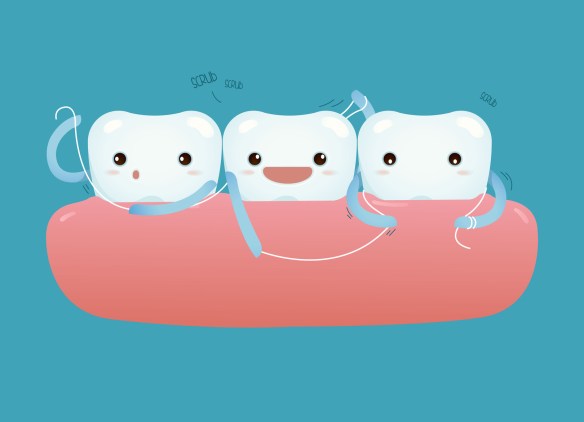
Do you still need to floss?

Teeth with dental floss for healthcare

Recently the Associated Press reported that there is very little scientific evidence backing the effectiveness of flossing. However, dentists agree that you absolutely should still floss. Here’s why: More than 500 different types of bacteria are found in dental plaque. Brushing removes most of the plaque from the surface of your teeth. But the plaque that hides in the hard-to-reach places, such as between your teeth and along your gum, can trigger an inflammatory response leading to gum disease (periodontal disease).

What is dental plaque?

Bacterial plaque is the principal cause of cavities and tartar. It is a thin, invisible film to the naked eye, which adheres firmly to the surface of teeth and gums. The bacteria in plaque develop by feeding on the residuals of food (especially the ones rich in sugar). These bacteria these bacteria then produce enzymes and acid substances that attack the enamel of the teeth, which gives rise to cavities. Eventually, dental plaque transforms into tartar and then into gum disease, which can degenerate into pyorrhea, a slow and relentless loss of teeth. This is how bacteria destroy the teeth.

Periodontal disease has been linked to diabetes, heart disease and Alzheimer’s disease.

Oral bacteria can migrate to distant sites in the body. Elderly and immuno-compromised patients, such as those suffering from cancer, diabetes or rheumatoid arthritis, may be especially vulnerable to systemic oral pathogens. Now researchers are asking if oral pathogens can also infect the brain with subsequent neuropathological consequences. Another theory is that pathogenic periodontal bacteria do not “infect” the brain but rather induce a systemic inflammatory response leading to injury of brain tissue.

Periodontal disease is also associated with weight loss and wasting, which might contribute to cognitive decline. Gum disease often results in tooth loss, which often leads to problems with chewing, swallowing and food selection. Individuals also poorly absorb nutrients from food when it is not chewed well. Evidence from several studies indicates deterioration in nutritional status in individuals missing teeth.

One study examined lifestyle factors of more than 100 pairs of identical twins. All of the pairs included one twin who had developed dementia and one who hadn’t. Because identical twins are genetically indistinguishable, the study involved only risk factors that could be modified to help protect against dementia.

Twins who had severe periodontal disease before they were 35 years old had a five-fold increase in risk of developing Alzheimer’s disease, the researchers found. Periodontal disease may be a marker for chronic exposure to disease that provokes an inflammatory response. Chronic inflammation can damage tissue, including the brain, which may contribute to the development of the disease. Based on the association with tooth loss, further investigation of inflammatory load as a risk factor for Alzheimer’s disease is warranted.

According to the U.S. Centers for Disease Control and Prevention, one out of every two American adults over the age of 30 has some form of gum disease. Flossing is a low-cost and low-risk way to prevent gum disease. Dentistry is definitely a medical profession that is attempting to decrease the number of patients it sees every year. With that said, despite what the Associated Press found in its research, almost every dentist in America will tell you to floss on. It’s a very easy way to prevent a host of other health problems.


10 Things to Remember if You Love a Person with Dementia

Mother and daughter

Daughter caring for her mother

It’s sometimes hard to love a family member who has dementia or Alzheimer’s disease. People with dementia can be quarrelsome, uncooperative, negative, whiney, belligerent or combative. They might get their nights and days mixed up, pace the floor for hours, wring their hands non-stop, or cry like a baby. They might ask you the same question twenty times in a row, refuse to budge when you need to get them to an appointment, or refuse to eat what you’ve made for dinner.

When the going gets tough, it helps to remember that you love the person who resides inside that body that is tight and tense and inflamed from amyloid plaque that has strangled the neurons and disrupted the neurotransmitters that allow thoughts to flow and emotions to stay even. He or she is the same person you married, the same loving parent who nurtured and guided you, the same sibling you shared holidays and outings with, or the same friend who offered a should to cry on or who helping you move to a new home.

When you’re about to lose it, walk out, or hide in the closet, stop for a moment and remember at least one of these 10 things about the person you lovingly take care of.

People with dementia and Alzheimer’s often feel:

  1. Embarrassed when you say, “ I just told you . . ..” Instead of reminding them that they forgot what you told them a second ago rephrase it, breaking it down into a simple sentence . . . or completely change the subject.
  2. Fearful because they don’t see things spatially the same way we do. Their sense of space is distorted and their vision gets skewed, not because there is something physically wrong with their eyes. But rather, the brain interprets what the eyes see, and when the brain doesn’t work right our perception gets distorted. Two things you can do to help are to put extra lights in dark areas of the living quarters and remove throw rugs in order to reduce falls.
  3. Lonely because they can’t communicate well, or some of their friends have “jumped ship.” Set up times for family or friends to visit or take your loved one on an outing.
  4. Confused because they don’t understand why they can’t drive anymore, or why they can’t go for a walk alone, or why they can’t remember where they live or what their son’s or daughter’s name is.
  5. Angry because the keys to the car have been taken away, or because they get frustrated when they can’t express their feelings or thoughts.
  6. Sad because they can’t read a book or newspaper, or can’t manage to engage in their favorite hobby or sport.
  7. Anxious because they can’t move as fast or get dressed by themselves or put on their shoes easily. Or, because they hear sounds that are disturbing or are bothered by someone else’s behavior.
  8. Nervous because they have lost their sense of balance and feel unsteady on their feet. Or because they don’t like the feel of water on their skin and don’t want to bathe and don’t want to be forced.
  9. Frustrated because they can’t write a check, figure out how much tip to leave, or remember how to use the TV remote control.
  10. Paranoid because they think someone is stealing their money or prized possessions.

When all else fails, take a deep breath and put on some music. It almost always uplifts the spirit—for both the caregiver and the person being cared for.

Please subscribe to my blog for more informative articles like this. Thank you!

The loneliness of caregiving: How to stay socially connected

Closeup of old woman hands holding mobile phone

Woman with mobile phone

My husband had younger-onset Alzheimer’s disease. The hardest thing for me during the duration of his illness was that I lost my companion. He was the person I made important decisions with. The person I went to movies with, ate dinner with, had interesting conversations with, traveled with, and shared delight with over the accomplishments of our children. He was the one I could complain to if I had a headache, stomach ache, or sore throat, without worrying about being called a hypochondriac or a baby. He was also the person who always cheered me on when I succeeded in achieving my goals.

When it came time to make the decision to move him to a memory care home, I especially missed having him help me decide on which room he’d live in, what type of furniture to buy, and the mattress he would sleep on. When it came time to bury him, it was agonizing for me to choose the plot of land where he would be laid to rest, and where I will be eventually interred.

During my many years of caregiving, I would often hide behind a mask of cheerfulness. It helped. I didn’t feel like a prisoner because I hired people to take my husband out to see a movie. Several of his friends kindly took him to lunch on a regular basis. It takes an effort to maintain friends and to stay socially involved, especially if you no longer work outside the home.

I promised myself that I wouldn’t let my husband’s disease ruin my life. I kept an active calendar filled with dance classes, lunches with friends, and even pursued a certificate in nutrition–all the while he was ill.

But it took planning and some might think I was a bit selfish. But when you look at the grand picture of caregiving, taking care of your personal needs is anything but being selfish. Studies show that 40 to 70 percent of family caregivers experience symptoms of clinical depression. One of the reasons, besides the daily stress, is isolation and loneliness.

Now for the lecture part: If you are a caregiver it is vital that you maintain a social network. Here are some ideas:

  • Stay connected with friends and family either through Facebook or another social media outlet, or by telephone or email, etc.
  • Make a lunch date with a friend at least once a week.
  • Many places of worship offer support for caregivers and families, including social events.
  • Go to a class—any kind of class: knitting, dance, weight training.
  • Join a support group—The Alzheimer’s Association offers classes and workshops for caregivers and for the person with memory loss.
  • Ask your friends and family for respite care. Have someone come over for a couple of hours a week so you can at least get out for a walk or go grocery shopping.
  • Go to the movies with a friend. It’s a great way to escape into another world for a few hours.
  • Call a best friend who is happy to talk; call someone who makes you laugh–laughter is truly the best medicine.
  • Bring your loved one to a Memory Cafe/Alzheimer’s Cafe. The challenges of living with memory loss can sever social connection at a time when it is needed most. Throughout the US and Europe, this casual social meeting is for caregivers and their care partner (the person they are caring for). Memory Cafes offer a way to socialize, explore art, music, poetry and listen to discussions and presentations. A Dutch psychologist opened the firs Memory Cafe in Holland. today there are about 200 Memory Cafes in the U.S.
  • Chat online with other caregivers. The Alzheimer’s Association offers chat rooms and so does the American Cancer Society. Check Elder Care Online for chat room and caregiver forum links. ElderCare Online’s Caregiver Support Network brings together online resources, groups and experts to create a virtual community dedicated to improving quality of life for you and your loved ones.

Summertime Eating Tips to Help Caregivers Keep Their Cool

Background texture of pink and white rose petals

Rose Petals Make a Delicious Cooling Drink and Jelly


It’s summertime and the livin’ is easy—or at least we’d like it to be. If you’re tired and stressed out from caregiving, here are some tips to help you stay cooler in summer.

According to the ancient Indian system of Ayurveda our body consists of three main elements or doshas—Vatta, Pitta and Kapha. Pitta consists of water and fire. It’s hot, so during summer when the temperature rises we want to eat cooling foods. Eating cooling foods not only keeps us from overheating, it reduces the tendency to get irritable, impatient and angry.

  • 1) First and foremost, stay hydrated. It’s especially important to make sure you and your loved ones are getting enough liquids because when we forget to drink we can become dehydrated quickly, which leads to other health problems. It’s also crucial to keep the brain hydrated in order to maintain mental alertness. Drink plenty of water and stay away from carbonated and caffeinated drinks. Herbal teas, and fresh fruit or vegetable juices are great in summer. Just remember that fruit juices are high in sugar and calories.
  • 2) Enjoy the bounty of summer fruits and vegetables. The summer fruits such as peaches, apricots, cherries, watermelon, cantaloupe, and berries are especially good for helping the body reduce the fiery heat of summer. According to Ayurveda, some of the recommended summer vegetables include cucumber, green leafy vegetables, green beans, squash, zucchini, asparagus, beets and eggplant.
  • 3) Sprinkle on the herbs and spices. They’re easy to use and contribute added flavor and antioxidants to your diet. Cooling spices include cardamom, coriander, fennel and tumeric. Cooling herbs include cilantro, mint and dill.
  • 4) Avoid hot, sour and salty foods including fermented food, red meat, and greasy and spicy food. Excess pitta aggravates the tendency towards heartburn and gastric hyperacidity.
  • 5) Here’s some good news—Ayurveda recommends ice cream during the hot summer months! So by all means, enjoy! Dementia patients are especially fond of ice cream. If the person you are caring for refuses to eat or eats very little, try serving ice cream. It contains protein, calcium and calories, and it’s easy to serve and eat. If weight gain or cholesterol is a concern, select a dairy-free version of America’s favorite dessert. Rice Cream, Coconut Bliss and Soy Delicious make delicious non-dairy, frozen desserts.
  • 6) My roses are bursting with fragrance and beauty. Roses are especially cooling and ff you have rose bushes that are free of chemicals, here’s a special treat to make: Rose Petal Jam. It’s fun and easy and the person you are caring for might even like to get into the act. It’s also very cooling and pacifies irritability. Spread it on toast, put a teaspoon on top of a scoop of ice or add it to warm milk for a yummy nightcap. (see recipe below)
  • 7) Make a lassi using a tablespoon of rose petal jam. Or use this delicious recipe to make the classic, cooling Indian-style milkshake.

Rose Petal Jam

Ingredients

  • ◦ 1 cup fresh rose petals (must never have been sprayed with any chemicals)
  • ◦ 3/4 cup water
  • ◦ 1 lemon, juice of (1/4 cup)
  • ◦ 2 1/2 cups sugar or evaporated cane juice crystals
  • ◦ 1 package pectin
  • ◦ 3/4 cup water

Directions

  1. Puree rose petals, 3/4 cup water and lemon juice in blender until smooth.
  2. Slowly add sugar.
  3. Blend till all sugar has dissolved; (leave in blender) Stir 1 package pectin into 3/4 cup water, bring to a boil, and boil hard for 1 minute. Pour mixture into blender with rose petal mixture until well blended.
  4. Do this very quickly – it sets up FAST!! Pour into small, sterilized jelly jars.
  5. Let set for 6 hours, till firm.
  6. Will keep one month in refrigerator.
  7. Freezes well.


Rose Water Lassi

  • 2 1⁄2 cups plain yogurt
  • 1/2-teaspoon fine sugar
  • ¼ tsp of ground cardamom
  • 2 teaspoons pure rosewater
  • 3⁄4 cups Ice water
  • 1 cup Ice cube cracked
  • Fragrant rose petals for garnish

Blend the yogurt, sugar, cardamom, rose water and iced water in a blender for 2 minutes. Add the ice and process for another 2 minutes. Pour the lassi into tall, refrigerated glasses and garnish with rose petals. Chill out and enjoy!

Seniors get a free cognitive exam as part of Medicare’s yearly wellness exam

Take advantage of this free cognitive exam. If you are a senior, it could make a huge difference in your overall well-being.

Despite clear signs that their memory and thinking abilities have gone downhill, more than half of seniors with these symptoms haven’t seen a doctor about them, a new study finds. 1

University of Michigan researchers and their colleagues say their findings suggest that as many as 1.8 million Americans over the age of 70 with dementia are not evaluated for cognitive symptoms by a medical provider, which in some patients can lead to a failure to uncover modifiable causes of thinking or memory impairment. 1

The study, published online in Neurology, the medical journal of the American Academy of Neurology, documents a clear lack of clinical testing for seniors with signs of cognitive problems.

“Early evaluation and identification of people with dementia may help them receive care earlier,” says study author Vikas Kotagal, M.D., M.S., who sees patients at the University of Michigan Health System and is an assistant professor in the U-M Medical School’s Department of Neurology. “It can help families make plans for care, help with day-to-day tasks including observed medication administration, and watch for future problems that can occur. In some instances, these interventions could substantially improve the person’s quality of life.”

For instance, knowing that a stroke or vascular issues in the brain caused dementia means patients can work to control risk factors like blood pressure that might otherwise cause it to keep worsening. If your physician suspects Alzheimer’s disease, there are drugs that can help delay the onset of full-blown dementia, and the possibility of placement in a memory care facility, which can help offset the catastrophic cost of the disease.

If you’ve had Part B for longer than 12 months, you can get the free Medicare Annual Wellness Exam to develop or update a personalized plan to prevent disease and disability based on your current health and risk factors. The exam includes:
• A review of your medical and family history
• Developing or updating a list of current providers and prescriptions
• Height, weight, blood pressure, and other routine measurements
 Detection of any cognitive impairment
• Personalized health advice
• A list of risk factors and treatment options for you
• A screening schedule (like a checklist) for appropriate preventive services. Get details about coverage for screenings, shots, and other preventive services.
This visit is covered once every 12 months (11 full months must have passed since the last visit).

Don’t delay. Call and make an appointment today. It’s free for all people with Medicare, and it’s to your and your family’s benefit.

Reference

  1. In addition to Kotagal, the study’s authors include Kenneth Langa, M.D., Ph.D., who holds professorships in both the U-M Medical School and Institute for Social Research; U-M neurologist Roger Albin, M.D., U-M neuropsychologist Bruno Giordani, Ph.D. and U-M researcher Mohamed Kabeto, M.S. Authors from other institutions are Brenda Plassman, Ph.D. of Duke University, who directs the ADAMS study from which the data on dementia patients was obtained; and James Burke, M.D., Ph.D., Gwenith G. Fisher, PhD, Robert B. Wallace, MD, MS, David C. Steffens, MD, MH and Norman L. Foster, MD. Langa is a member of the U-M Institute for Healthcare Policy and Innovation.
    The study was supported by the University of Michigan, the National Institute on Aging (AG027010, AG009740, and AG007137), and University of Utah. Reference: Neurology,doi/10.1212/WNL.0000000000001096


The 5 Most Important Antidotes to Premature Aging

My friend works in a high-stress environment and has to deal with dozens of people of all ages and backgrounds on a daily basis. She is surprised how much older her clients look than their chronological age. There are several possible reasons for this but stress is the number ONE factor responsible for premature aging.

The particular population my friend works with has all kinds of problems, some of which could have been avoided, and some of which are due to bad choices they’ve made. Some of their problems are due to no fault of their own. But the bottom line is they are under considerable stress and stress takes a toll on all aspects of your life including sleep, immunity, and mental health and happiness.

Here are the 5 most important things you can do to relieve stress and prevent premature aging.

1. Meditate. Transcendental Meditation, in particular, calms the mind, reduces oxygen consumption, and allows the body to deeply relax, so that you’re able to face the challenges of the day with a clear mind and more flexibility. Instead of cursing the driver who cuts you off, a regular mediation practice can help you deal with everyday challenges without getting stressed out. Mediators often comment that stress rolls off them like water off a duck’s back.

2. Exercise as a stress reliever has been highly documented in scientific studies. It gets your heart pumping, supports healthy muscles, bones, and flexibility, helps release stress and tension in the body, and makes you feel good because it releases endorphins. Exercise also supports overall health and immunity.

3. Eat plenty of fruits and vegetable. Premature aging results from not getting the recommended daily intake of antioxidants. And I don’t mean in the form of nutritional supplements. If you regularly do not eat the 5-7 recommended servings of fruits and vegetables you will notice the effects, some of which are visible on your face. Brown spots, lines and wrinkles appear prematurely when our cells are being damaged by free radicals produced by the sun, polluted air, chemical laden water, fruits and vegetables, and cigarette smoke. Even worse, free radicals are the culprits in most modern-day diseases including rheumatoid arthritis, many cancers, heart disease and some eye conditions, such as cataracts and macular degeneration.

The good news is there is something you can do to slow down the aging process. Eat your fruits and vegetables because they are a rich source of the antioxidants you need to protect your cells from free radical damage. Go for color and variety.

4. Do not smokeNot only does cigarette smoking take its toll on your lungs, but also it shows up as lines and wrinkles on your face. Those premature wrinkles show up other places, as well, like on your inner arms. The nicotine in cigarettes causes the narrowing of the blood vessels in the outermost layers of your skin. Blood flow is restricted, which means your skin doesn’t get the oxygen and other nutrients it needs to stay supple and healthy. There are more than 4,000 chemicals in tobacco smoke that hinder collagen and elastin production. These are the fibers that make your skin smooth and supple. Additionally, smokers usually purse their lips when inhaling and squint their eyes to avoid smoke getting in their eyes. Both of these habits contribute to premature wrinkling, and all of the above contribute to sagging skin. The remedy? Don’t smoke!

5. Sleep tight. There is no substitute for a good nights’ sleep. Most of us require 7 to 8 hours of sleep every night to perform our best. Adequate sleep repairs your body, sharpens your mind and stabilizes emotions. Lack of sleep triggers the body to increase production of cortisol, which makes it harder to fall asleep and stay in a deep sleep because on some level your body and brain think they need to stay alert for danger. Added to that, increased cortiosol production leads to weight gain.

The adrenals increase gluconeogenesis, which provides the body with glucose from protein, rather than carbohydrates.  This decreases serotonin and melatonin, which results in poor sleep and leads to food cravings for carbohydrate-rich foods in order to uplift mood, which releases more serotonin and insulin. This leads to more stress and insulin production to regulate glucose, which may lead to fat storage, weight gain and insulin resistance. It becomes a vicious cycle. (Raäikkonen, 2007)

Insufficient sleep is also associated with lower levels of leptin, a hormone that alerts the brain that it has enough food, as well as higher levels of ghrelin, a biochemical that stimulates appetite. Consequently, poor sleep may result in food cravings. (Healthy Sleep, http://healthysleep.med.harvard.edu/healthy/matters/consequences/sleep-and-disease-risk)

So if you want to slow down your aging, and look younger than you are, include the following in your daily health regimen:

1)    Exercise

2)    Meditation

3)    Antioxidants

4)    Regular, restful sleep

5)    And Don’t Smoke!

If you’d like to read more articles like this one, please subscribe to theheatlhycaregiverblog.com