Unknown's avatar

About healthycaregiver

I took care of my husband for 10 years while he had earlier-onset Alzheimer's disease. My experience, along with my expertise as a wellness coach and health writer, prompted me to write a book on how caregivers can maintain their health, increase energy, and experience peace. My book "Calmer Waters: The Caregivers' Journey Through Alzheimer's and Dementia" will be released in June, 2016 by Cardinal Publishing Group. Please follow my blog for caregiving advice and the latest scientific studies on staving off dementia and supporting cognitive function.

7 Reasons to Indulge in Chocolate on Valentine’s Day and All Year Long

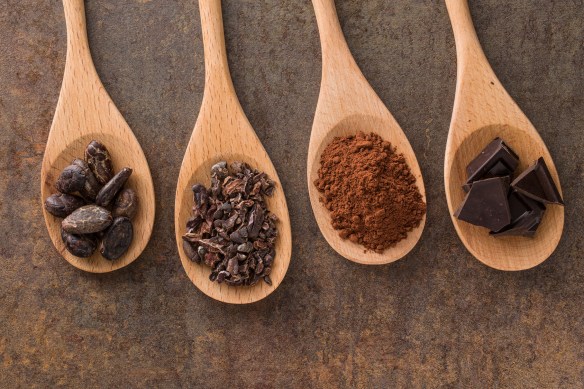
cocoa and dark chocolate in wooden spoonsAmericans buy more than 58 million pounds of chocolate around the holiday of love. Besides the delicious taste, smell and aphrodisiac effects, researchers are continually discovering more health benefits.

The use of cacao for health benefits dates back at least 3000 years. It was revered as a food, medicine and currency in Mexico, Central and South America, where it was also celebrated and incorporated into artwork, legends and sacred rituals. Now, because of extensive research, we know the main health benefits of cacao come from the flavonol epicatechin. The process of manufacturing dark chocolate retains epicatechin, whereas milk chocolate does not contain significant amounts. You can have your chocolate and eat it too, but if you want to enjoy its extensive health benefits be sure to eat high-quality dark chocolate. Or go one step further and enjoy raw cacao, which might take some getting used to for the simple reason we are used to sweetened chocolate. And if you just want the pure and simple health benefits, forego the chocolate and take raw cacao capsules. Although I definitely wouldn’t recommend giving your sweetheart a bottle of cacao capsules on Valentine’s Day. Indulge in the good-tasting stuff!

  1. Chocolate contains good-for-you antioxidants Chocolate comes from the cacao bean, which thrives in hot, rainy climates in South America, Africa and Indonesia. Similar to grapes, the local soil and climate affects the taste of the harvested beans. When you buy a chocolate bar that has the percentage number on the bar wrapper, that represents the weight that comes from the cacao bean content, according to Robert L. Wolke, author of What Einstein Told His Cook: Kitchen Science Explained. The higher the number, the lower the percentage of sugar and the more bitter and complex the flavor, he says. And the higher the number the more antioxidants.
  2. Cacao is rich in magnesium, sulfur, calcium, iron, zinc, copper, potassium and manganese, all essential minerals . . . and antioxidants that support immune health.
  3. Chocolate reduces your risk of Type 2 Diabetes Researchers discovered that the flavanols in chocolate have beneficial effects on insulin resistance, a risk factor for Type 2 diabetes. In a 30-year-long study of 953 men and women from the Maine-Syracuse Longitudinal Study (MSLS), researchers found that the individuals who never or rarely ate chocolate had a significantly higher chance of developing Type 2 diabetes after five years when compared to individuals who ate chocolate more than once a week. Habitual chocolate intake and type 2 diabetes mellitus in the Maine-Syracuse Longitudinal Study: (1975-2010): Prospective observations.
  4. Protects you from heart disease A 2012 report published in the American Journal of Clinical Nutrition found that dark chocolate has a beneficial effect on blood pressure, vascular dilation and cholesterol levels, and can play a role in reducing metabolic precursors that lead to diabetes and eventually to heart disease. However, a study published in October 2016 (John Wiley & Sons, Ltd.) found that out of 32 cocoa product samples analyzed, the cocoa flavanol dose must be about 900 mg or above to decrease blood pressure, and contain 100 mg of epicatechin. So if you want to eat chocolate for health benefits, be sure to check the ingredient label. The aim of the study was to review the effect of cocoa flavanols on cardiovascular health, with emphasis on the doses ingested, and to analyze a range of cocoa products for content of these compounds. PubMed was searched from 2010 to locate systematic reviews (SR) on clinical effects of chocolate consumption.
  5. Supports mental function In a study carried out by the University of L’Aquila in Italy, 90 elderly participants with mild cognitive impairment (MCI) drank cocoa containing high, medium or low levels of flavanoids. At the end of the eight-week study researchers found improvements in the motor response, working memory, task switching, and verbal memory in the participants who drank cocoa with a higher flavanol content. (Hypertension, Aug. 14, 2012) Alzheimer’s and dementia patients are especially fond of sweets because the taste of sweetness is the last taste to disappear.  So if your loved one has Alzheimer’s or dementia, indulge him/her in chocolate. Just remember not to overdo it and make sure to include good dental hygiene in your loved one’s daily regimen.
  6. Helps you think better after a sleepless night The next time you have a bad night’s sleep, instead of indulging in a cup of Joe drink hot chocolate. Sleep deprivation is a risk factor for cardiovascular disease, and scientists have found that flavanol-rich chocolate counteracted vascular impairment after sleep deprivation and restored working memory performance. Their theory is that the study’s participants had improved cognitive performance because of the effects of cocoa flavonoids on blood pressure and blood flow.Flavanol-rich chocolate acutely improves arterial function and working memory performance counteracting the effects of sleep deprivation in healthy individuals.
  7. Makes you feel gooood Scientists have discovered why chocolate uplifts your mood. Serotonin is the neurotransmitter responsible for keeping us happy, and cacao stops the amino acid tryptophan from breaking down. Since tryptophan is one of the amino acids that make serotonin this, in turn, limits the breakdown of serotonin. (Frontiers in Experimental Pharmacology and Drug Discovery, Dec. 2013)

On Valentine’s Day celebrate with your loved one by enjoy a steaming cup of delicious hot chocolate made with whole milk or rice or flax milk. Or indulge in a dark chocolate truffle, candy bar or chocolate ice cream. It’ll boost your spirit and your immunity. Just be careful not to overdo it because the calories can add up quickly.

As an added treat, make this yummy chocolate souffle. It’s easier than you think.

Chocolate Souffle

Ingredients

1⁄3 cup sugar, plus additional for sprinkling
5 ounces bittersweet chocolate chips
3 large egg yolks, at room temperature
6 large egg whites
1⁄8 tablespoon butter

Directions

Preheat oven to 375°F.

Measure out sugar, chocolate and separate eggs.
Butter soufflé dish entirely and then add sugar (additional) coating the entire dish.
Melt chocolate in a double boiler, or directly on the stove.
Add yolks to chocolate (this will harden the chocolate so don’t be alarmed).
Beat egg whites with a pinch of salt. Slowly add sugar, a little at a time. Beat until egg whites hold stiff peaks.
Fold white mixture into chocolate slowly and stir until smooth.
Pour into large soufflé dish or 4 ramekins and run the end of your thumb around inside to remove any extra batter.
Bake until puffed and crusted on top but still jiggly in center, 20 to 25 minutes.
Serve immediately with whipped cream or ice cream.

Yay chocolate!


Supplementation with Vitamin D Helps the Winter Blues

Until recently, it was commonly believed that a daily dose of sunshine guarantees adequate vitamin D levels. Well, not anymore.

The latest studies are showing that most people, and especially the elderly, are vitamin D deficient. Although our bodies manufacture vitamin D when exposed to sunshine, how much depends on where you live and how much exposure you get. In fact, people who live in areas where the sun rarely shines make no vitamin D at all, and must depend entirely on dietary supplements and vitamin D-fortified foods. During the winter, almost everyone who lives in the northern hemisphere can benefit from vitamin D supplements to boost immunity, and to stave off the blues and other health complaints, including osteoporosis.

Vitamin D deficiency is especially common in the elderly. Researchers have found a correlation between vitamin D deficiency and low mood, depression and worse cognitive performance in older adults. In a recent study, 1618 patients who averaged 73.8 years old were tested for vitamin D deficiency. Those with severe vitamin D deficiency were twice as likely to suffer from depression.1

Another study of a cross-section of 80 older adults, 40 with mild Alzheimer’s disease and 40 healthy adults, found that vitamin D deficiency was associated with low mood and impairment on two of four measures of cognitive performance. 58% of the participants had abnormally low vitamin D levels. After adjusting for age, race, gender, and the season in which vitamin D levels were studied, researchers correlated vitamin D deficiency with an active mood disorder. The deficiency was also related to a worse performance on the cognitive performance test called Short Blessed Test (SBY). There was no difference in performance on the Mini-Mental State Exam (MMSE). 2

Why is Vitamin D important?
Vitamin D refers to two biologically inactive precursors – D3, also known as cholecalciferol, and D2, also known as ergocalciferol. Vitamin D3 is produced in the skin on exposure to UVB radiation (290 to 320 nm), and is more bioactive.Vitamin D deficiency may exacerbate osteopenia, osteoporosis, muscle weakness, fractures, some cancers, autoimmune diseases, infectious diseases and cardiovascular disease. There is also some evidence that vitamin D may reduce the incidence of several types of cancer and type-1 diabetes, and the onset of dementia.

Whether you are a caregiver, healthy adult, or someone with mild dementia, it’s important that you make sure your intake of vitamin D is adequate.

How much do you need?
The current recommended intakes for vitamin D are 600 IU for adults 19 to 70, and 800 IUs for 71 years and older. But Michael F. Holick, PhD, M.D., the world’s leading expert on vitamin D, recommends taking a minimum of 1,000 IUs of supplemental vitamin D daily for children and adults. 3 Other researchers recommend taking up to 8,000 IUs per day. If you want to know for sure what your blood serum levels of vitamin D are, ask your physician to test you.

References

  1. Lapid MI, Cha SS, Takahashi PY.Clin Interv Aging. 2013;8:509-14. doi: 10.2147/CIA.S42838. Epub 2013 May 3.
    2. Wilkins CH, Sheline YI, Roe CM, Birge SJ, Morris JC. Vitamin D deficiency is associated with low mood and worse cognitive performance in older adults.Am J Geriatr Psychiatry. 2006 Dec;14(12):1032-40.
    3. Wiiliam B. Great, Ph.D, and Michael F. Holick, Ph.D, M.D. Benefits and Requirements of Vitamin D for Optimal Health: A Review, Alternative Medicine Review, Volume 10, Number 2, 2005.


A Cheap, Easy Way to Predict Alzheimer’s

A Cheap, Easy Way to Predict Alzheimer’s.

Vitamin E Slows Functional Decline in Patients with Alzheimer’s

Vitamin E Slows Functional Decline in Patients with Alzheimer’s.

Normal
0
0
1
601
3426
28
6
4207
11.1287

0

0
0

First we heard that it helps and then not long ago we heard that vitamin E does not help prevent Alzheimer’s disease.1 The newest research suggests that a daily dose of 2000 IU per day of vitamin E might help to slow functional decline for patients with mild to moderate Alzheimer’s, and that it could help reduce the amount of care these patients require by two hours a day.


Most studies of vitamin E, including this new one, have focused on alpha-tocopherol, a synthetic form of vitamin E. This is extremely significant because in its natural form vitamin E consists of many compounds—including d-alpha tocopherol, high gamma tocopherol, mixed tocopherols and tocotrienols—that have been proven safe and beneficial. If the natural form of vitamin E had been used in this study, the outcome might have been even better. And if it had been used in the countless studies done over the years, many of which were negative, the results might have come out very different.


In the current study, researchers followed 613 patients with mild to moderate Alzheimer’s disease, all of whom were taking an acetylcholinesterase inhibitor (Aricept, Exelon, Razadyne). Of these patients, 155 received 20 mg a day of memantine – a class of drugs used to treat Alzheimer’s – while 152 patients received 2,000 international units a day (IU/day) of vitamin E, 154 received a combination of both and 152 took a placebo. The patients who took the vitamin E had a 19% reduction in their functional decline, compared with the patients who received the placebo. The researchers said that this was equivalent to approximately 6.2 months in time over the 2.3 year follow-up period.


They also noted that memantine and a combination of both memantine and vitamin E demonstrated no clinical benefit for the patients.

The researchers pointed out that functional decline as a result of Alzheimer’s disease is increasingly recognized as having a significant impact on a patient quality of life, as well as putting a strain on social and economic costs. But they said their findings suggest that vitamin E could combat these factors.


What you should know

Vitamin E is naturally found in a variety of foods including eggs, fortified cereals, meat, nuts, poultry, some fruits and vegetables (green, leafy vegetables, avocados, asparagus, kiwi, broccoli, pumpkin, sweet potato, mangos, tomatoes, papayas), wheat germ, sunflower and safflower oils.


Taking a high dosage of alpha-tocopherol alone has been shown to deplete the body of other forms of vitamin E, which are much more powerful antioxidants and have been proven to have unique health properties. And taking a single form of vitamin E, such as synthetic alpha-tocopherol, denies the very fact that nature offers seven different forms of tocopherols and tocotrienols for a reason.


In order to get the full protective benefits of vitamin E, it’s important to make sure you’re taking a supplement that contains a full spectrum of vitamin E compounds—including d-alpha tocopherol, high gamma tocopherol, mixed tocopherols and tocotrienols.


The bottom line is this: Based on the large body of scientific evidence that’s been published over the past several decades, we should all be taking a wholesome full spectrum vitamin E … because full spectrum vitamin E is safe and good for your heart, your brain, your overall health, and as a protectant against cancer and degenerative diseases.


References

  1. Isaac MG, Quinn R, Tabet N. “Vitamin E for Alzheimer’s disease and mild cognitive impairment.” Cochrane Database Syst Rev. 2008 Jul 16;(3):CD002854. doi: 10.1002/14651858.CD002854.pub2.
  2. Dysken Mw, et al. “Effect of vitamin E and memantine on functional decline in Alzheimer disease: the TEAM-AD VA cooperative randomized trial.” JAMA. 2014 Jan 1;311(1):33-44. doi: 10.1001/jama.2013.282834.

Are multivitamin supplements a waste of money . . . or not?

On December 16, 2013 the news media broke the news that three studies found that a daily multivitamin won’t help boost the average American’s health, and that the experts behind the research are urging people to abandon the use of the supplements.

To put things in perspective, in 2002 the Drs. Robert H. Fletcher and Kathleen M. Fairfield, two Harvard Medical School researchers, wrote new dietary supplement guidelines that appeared in the Journal of American Medical Association, (JAMA, June 19, 2002) recommending that all adults take a daily multivitamin. This was a reversal of the journal’s long-standing position that multivitamins were unnecessary because essential nutrients could be obtained in the diet.

Fletcher and Fairfield reviewed 150 scientific studies from 1966 to early 2002 and concluded that people who take vitamins can help protect themselves from chronic diseases. JAMA published this information: inadequate levels of antioxidant vitamins A, C and E may increase heart disease and cancer risk; low levels of folic acid and vitamins B 6 and B12 are risk factors for heart disease, neural tube defects and colon and breast cancer; and that inadequate vitamin D intake contributes to osteoporosis and bone fractures.

So, whom should you believe?

Here are the reasons why you should continue taking a multivitamin despite the glaring headlines that appeared this week.

  • Thanks to Mike Adams, the Health Ranger and editor of NaturalNews.com for pointing out that: these multivitamin studies are universally structured so that they are based on cheap, low-grade, synthetic vitamins and inorganic minerals. Not coincidentally, these brands of low-grade multivitamins are actually manufactured by companies owned by pharmaceutical interests. They really do have a financial incentive to make multivitamins look bad, and so their multivitamin formulations are intentionally designed to fail. The vitamin E studied in this science review, for example, was synthetic, and isolated vitamin E has a long history of being toxic for human consumption. Note carefully that these researchers never looked at full-spectrum vitamin E, including the tocopherols, nor did they bother to study a food concentrate form of vitamin E (because it would have been amazingly beneficial to heart health).
  • The study did not include anything about the day-to-day food intake of the participants. In one of the studies, researchers randomly assigned 1,700 heart attack survivors enrolled in a trial of therapy known as intravenous chelation to a daily regimen of high doses of vitamins and minerals or placebo pills. Participants were asked to take six large pills a day, and researchers think many developed pill fatigue (didn’t want to take the pills). Nearly half the participants in each part of the study stopped taking their medication before the end of the study. The average time people stuck with it was about two and a half years. After an average of 55 months, there was no significant difference between the two groups in a composite measure that counted the number of deaths, second heart attacks, strokes, episodes of serious chest pain and procedures to open blocked arteries. So how could the researchers say that taking multivitamins is a waste of money if the participants didn’t even take them? And we don’t know anything about the diets of these people. They might have been living on soda, ice cream, steak and fries.
  • Almost 80% of Americans do not receive the recommended five daily servings of fruits and vegetables that would provide sufficient amounts of key vitamins and minerals needed for a healthy diet. Multivitamins help, but they can’t replace a nutritious diet filled with fresh fruits, vegetables, and good quality protein and fats.
  • Supplements, can in many cases, help people for a number of reasons. Because most diets are not adequate to provide all necessary nutrients, multi-vitamins and minerals can help prevent vitamin and mineral deficiencies. Recent nutrition surveys in the US have found large numbers of people who consume too little calcium, magnesium, iron, zinc, and, possibly, copper and manganese. Weight-loss, pure vegetarian and several other diets can also place some people at risk of deficiencies that vary with the type of diet they consume.
  • Certain groups of people are at especially high risk of dietary deficiencies. Studies have found that elderly people living in their own home often have dietary deficiencies of vitamins A and E, calcium, zinc, and sometimes of vitamins D, B1 and B2. Pre-menopausal women have been found often to consume low amounts of calcium, iron, vitamin A, and vitamin C. Multi-Vitamins can provide amounts of nutrients that are larger than the diet can provide
  • Occasionally there are individuals whose depression, anxiety, or memory problems are caused by a deficiency in some vitamin, mineral, or trace element — most commonly one of the B complex vitamins. Deficiencies of thiamine (vitamin B1), niacin, pyridoxine (B6), or cobalamin (B12) sometimes produce mental or emotional problems, including depression. Folic acid deficiency may cause problems with mood and mental function.
  • Our soil is depleted of minerals and other nutrients, thanks to over-harvesting and the use of pesticides and insecticides. Our food is not the food our ancestors thrived on. Most people rely on fast foods, and even if you are conscious of what you eat most of us are not getting adequate nutrition.
  • Taking a good quality multivitamin is an insurance policy to help support overall health, mood and energy. I would never take the risk of NOT taking one.


American Recall Center–Important Info

The American Recall Center provides drug and medical device recall information alongside practical healthcare information and support. The online site aims to build a comprehensive resource for helping consumers find accurate information about drugs and medical devices that have been recalled or labelled with warnings and contraindications.

The site’s blog also contains informative articles such as “Can Statins Cause Cataracts?” and “Preparing for and Recovering From a Knee Replacement: What you need to know.”

The Center is a welcome addition to the online medical community for patient safety alerts, recalls and general information. Find it at: http://www.recallcenter.com/

Healthy Holiday Sweets for People with Dementia and for Everyone Else

It seems that people with dementia, and the elderly population in general, really love ice cream and sweets. A healthy, vital human being has between 10,000 and 15,000 taste buds. But as we age we start to lose sensitivity to salty and bitter tastes. Simultaneously, the sense of smell begins to wane, impacting the sense of taste even more. Additionally, some medications have a tendency to deplete our sensitivity to certain tastes.

The sense of taste in people with Alzheimer’s or Parkinson’s disease is more dramatically affected by the progression of the disease. The taste of sweet is the first taste we are exposed to as infants, and the last one that we enjoy as we reach the end of life. So it makes sense that as people progress through the stages of Alzheimer’s disease they enjoy sweets more than other foods

The problem is sugar is not a healthy food. It wreaks havoc on the immune system and blood glucose levels. Here are two healthy alternatives to white sugar.

Stevia is a South American herb that is processed into a white powder or liquid. It has been used for more than 30 years in foods in Japan. Stevia contains no calories and no carbs and is 25 to 30 times sweeter than sugar. The best thing about stevia is that it is good for you, and is much healthier than artificial sweeteners such as aspartame, saccharin and sucralose. Stevia does not contribute to tooth decay and helps control normal blood sugar levels, making it a safe, healthy sweetener for diabetics. The one downside of stevia is that it has a unique flavor that doesn’t appeal to everyone.

Stevia in available in most health food stores. You can also buy 12 different liquid stevia flavors (vanilla cream, English toffee, dark chocolate, root beer, etc.) from the Healthy Shopping Network, http://www.healthyshopping.com/Stores/List.asp?Sid=12

In general, when substituting stevia for sugar, follow these guidelines:

1 Tsp Stevia (powered)=1 Cup Sugar
1 Tsp Stevia (liquid)=1 Cup Sugar
1/2 Tsp Stevia=1 Tbsp Sugar
6 Drops liquid Stevia=1 Tbsp Sugar
A pinch of Stevia=1 Tsp sugar
2 drops liquid stevia=1 Tsp sugar

Recipes using stevia

Banana Bread
Pre-heat oven to 325°
Oil and dust a bread pan with a bit of flour

Ingredients
3 bananas
1-¾ cups flour (substitute gluten-free flour or almond flour, if you like)
1/4 tsp powdered stevia extract
1/2 tsp stevia concentrate
1 tsp. baking soda
½ cup canola oil
1 egg
½ cup chopped walnuts (optional)

Puree bananas in a food processor. Add the dry ingredients, and then the egg and oil. Don’t over process! Blend until the mixture is moist and evenly blended. Mix in the walnuts. Bake for 50 minutes to 1 hour, or until an inserted toothpick comes out clean. Turn out the loaf and cool on a rack.

The following two recipes are from
Rita DePuydt”s Stevia: Naturally Sweet Recipes for Desserts, Drinks and More! Published by Book Publishing Company

Hot Cocoa
(4 to 5 servings)
3 tbsp cocoa
1/2 tsp powdered stevia extract
4 to 5 cups of soymilk, coconut milk or cow’s milk
2 tbsp honey or maple syrup
1 tsp vanilla extract
Mix the cocoa and stevia extract together in a medium-sized saucepan. Add about 1/2 cup of the soymilk or milk to the dry ingredients to make a paste. Gradually thin the paste with about ½ cup of the milk. Add the hone or maple syrup while bringing to a low boil. Boil for 2 to 3 minutes. Add the rest of the milk to the desired richness. Add the vanilla and return to burner until heated through.

Coconut Fig Chews

1/2 cup chopped figs
1/2 cup unsweetened fruit juice or water
1 cup unsweetened coconut
1/2 cup unsweetened sesame seeds
1/8 tsp salt
1/2 tsp powdered stevia extract
2 tablespoons cashew butter
1/3 cup whole-wheat pastry flour
Preheat the oven to 350 degrees F. Oil a cookie sheet
Stew the chopped figs in the fruit juice or water for 8 to 10 minutes. Add the coconut to the pan, mix and set aside.
Grind the sesame seeds in a blender. In a mixing bowl, place the stewed figs and coconut, ground sesame seeds, salt, stevia extract, cashew butter, and flour. Mix well. Shape the cookies with your hands. Place on the cookie sheet and flatten slightly.
Bake for 12 to 14 minutes

Coconut sugar is another healthy sweetener that can be used as a sugar replacement in all baked goods. It doesn’t taste like coconut and isn’t quite as sweet as white sugar. Coconut sugar comes from the nectar of tropical coconut palm blossoms. The sweet sap from the blossoms is boiled until it thickens and caramelizes. It is then ground into very fine crystals that are called coconut sap sugar. Substitute the same amount of coconut sugar for white sugar in your recipes.

Coconut sugar has a low glycemic index of 35. The glycemic index provides a measure of how quickly blood sugar levels (i.e. levels of glucose in the blood) rise after eating a particular type of food. The higher the glycemic index the faster your blood sugar levels rise.
White sugar has a glycemic index of 60 to 65. Corn syrup has a glycemic index of 100 to 115. Brown sugar has a glycemic index of 70.

Coconut sugar contains 16 of the 20 amino acids, including glutamine, which helps reduce sugar cravings. Glutamine is also important for healthy brain function. Coconut sugar is also rich in minerals and contains the vitamin B complex.

Granulated coconut sugar is available at health food stores and online. http://astore.amazon.com/livheamom-20/detail/B0043Q3LH6
Makes sure to look on the level to make sure it is 100% coconut sap sugar.

Enjoy your holidays and enjoy sharing your sweets made with healthy sweeteners!

10 Stress-relieving Holiday Tips for Caregivers

  1. Drink a glass of water every other hour to keep hydrated. Staying hydrated helps support immunity, and reduces stress and irritability. It’s important to remember that your brain needs water, too. A dehydrated brain doesn’t think clearly, which can contribute to stress and anxiety.
  2. Include a protein with every snack. It’s difficult to stay away from sweets this time of year. But including a protein with every snack helps maintain healthy blood sugar levels. Try apple slices smeared with almond butter or topped with a cheese slice. A small handful of almonds or walnuts and a couple of dates satisfy the sweet tooth and provides vitamins, minerals and protein.
  3. Plug in an aromatherapy diffuser and inhale the relaxing scent of lavender, nernoli (orange blossom) or any scent you like.
  4. Pour some Epsom salt into a hot bath, light a candle, put on soothing music, and soak away your stress and anxiety.
  5. Turn off the TV, phone, iPad, computer, and other electronic devices an hour before bed. Instead, listen to relaxing music while sipping a cup of chamomile tea.
  6. Journaling is a wonderful, inexpensive way to release your concerns and worries on paper. It’s available when your therapist and best friend are not, and you can do it anywhere at your leisure.
  7. Move your body. Exercise is one of the very best stress relievers. You don’t have to buy a special outfit or go to a gym. Put on a pair of walking shoes and make a habit of walking 1/2 hour every day. If it’s too cold outside, put on your favorite dance music and move as though no one is watching.
  8. Fill half of you plate with green leafy vegetables. They contain magnesium, “the mood mineral,” which supports healthy blood sugar and blood pressure, decreases food cravings, and nourishes and calms the nervous system.
  9. Laugh to reduce anxiety and produce endorphins, the feel-good hormone. Look at funny family photos, reminisce with a high school friend, or watch a comedy. Whatever tickles your funny bone will definitely lift your spirits.
  10. Aim to be in bed before 10pm and make a habit of going to bed and rising at the same time every time. You’ll sleep better and have more energy and resilience.

The #1 challenge that caregivers face

Stress is undoubtedly the biggest challenge that caregivers face. Statistics show that the stress of care giving can result in chronic disease for the caregiver and take as many as 10 years off one’s life.

When we are chronically stressed the body’s fight or flight response gets turned on and forgets to shut off. When the body is in a constant state of “emergency alert” the adrenal glands—the small walnut shaped glands that sit on top of your kidneys—get “stuck” in the on position and produce an excess of cortisol, the stress hormone, which can result in sleep problems, weight gain, and chronic health problems.

Additionally, the liver releases too much glucose and fatty acids into the bloodstream. The excess glucose goes unused, so your body has to produce an enormous amount of insulin to handle it. Eventually, this can result in hypoglycemia or diabetes, and weight gain. Fat that is dumped into your blood also goes unused, so it clogs your arteries, leading to cardiovascular disease.

5 foods that can help relieve stress

  1. Dark leafy greens such as kale, Swiss chard, and spinach contain vitamin D, which helps with high levels of stress, and vitamin B, especially folic acid, which is depleted by stress. B vitamins are needed to make serotonin, a neurotransmitter that directly affects mood in a positive way.
  2. Wild-caught salmon contains magnesium the mood mineral, and vitamin D, which helps with high levels of stress.
  3. Yellow fruits such as peaches, nectarines and apricots, and cantaloupe contain vitamin A, important for a healthy immune system.
  4. Asparagus is high in folic acid, which can help stabilize your mood.
  5. Cottage cheese is high in calcium and protien. Add a fruit high in vitamin C, like oranges or strawberries, for the added antioxidant benefit that fights free radicals produced by stress and helps support the adrenal glands.

10 tips for instant stress relief

  • Eat within one hour of arising and by 10am. Eating breakfast restores healthy blood sugar levels, which have dropped during the night. Instead of a bowl of cereal with skim milk and a banana, eat protein and a healthy fat such as an omelet and avocado and a slice of whole grain toast. A healthy breakfast provides you with the energy you need to get through the morning, while maintaining a sense of equilibrium.
  • Take a walk—even a quick 10-minute walk can do wonders.
  • Sit down and breathe deeply for 10 minutes, focusing on the breath.
  • Get an aromatherapy plug-in diffuser. (They are available online.) Lavender calms the nerves and uplifts mood.
  • Take a bath with Epsom salts and/or aromatherapy essential oils.
  • Put on some music in your living room and dance with your care partner. It does wonders.
  • Put on a funny movie and laugh.
  • Get a dog. Hundreds of studies show that interacting with man’s best friend is a great stress reliever.
  • Stay hydrated! Drink plenty of water. Our bodies and our brains depend on it.  Dehydration contributes to foggy thinking and stresses out the body.
  • And remember, this too shall pass.

7 Summertime Eating Tips for Care Partners

It’s summertime, and the livin’ is easy—or at least we’d like it to be. If you’re tired and stressed out from care giving, here are some tips to make mealtime easier, for you and your care partner.

According to the ancient Indian system of Ayurveda our body consists of three main elements or doshas—Vatta, Pitta and Kapha. Pitta consists of water and fire. It’s hot, so during summer when the temperature rises we want to eat cooling foods. Eating cooling foods not only keeps us from overheating, it reduces the tendency to get irritable, impatient and angry.

1)   First and foremost, stay hydrated. It’s especially important to make sure dementia patients are getting enough liquids because they forget to drink and can become dehydrated quickly, which leads to other health problems. It’s also crucial to keep the brain hydrated in order to maintain cognition. Drink plenty of water and stay away from carbonated and caffeinated drinks. Herbal teas, and fresh fruit or vegetable juices are great in summer. Just remember that fruit juices are high in sugar and calories.

2)   Enjoy the bounty of summer fruits and vegetables. The summer fruits such as peaches, apricots, cherries, watermelon, cantaloupe, and berries are especially good for helping the body reduce the fiery heat of summer. According to Ayurveda, some of the recommended summer vegetables include cucumber, green leafy vegetables, green beans, squash, zucchini, asparagus, beets and eggplant.

3)   Sprinkle on the herbs and spices. They’re easy to use and contribute added flavor and antioxidants to your diet. Cooling spices include cardamom, coriander, fennel and tumeric. Cooling herbs include cilantro, mint and dill.

4)   Avoid hot, sour and salty foods including fermented food, red meat, and greasy and spicy food. Excess pitta aggravates the tendency towards heartburn and gastric hyperacidity.

5)   Here’s some good news—Ayurveda recommends ice cream during the hot summer months! So by all means, enjoy! Dementia patients are especially fond of ice cream. If the person you are caring for refuses to eat or eats very little, try serving ice cream. It contains protein, calcium and calories, and it’s easy to serve and eat. If weight gain or cholesterol is a concern, select a dairy-free version of America’s favorite dessert. Rice Cream, Coconut Bliss and Soy Delicious make delicious non-dairy, frozen desserts.

6)   My roses are bursting with fragrance and beauty. Roses are especially cooling and ff you have rose bushes that are free of chemicals, here’s a special treat to make: Rose Petal Jam. It’s fun and easy and the person you are caring for might even like to get into the act. It’s also very cooling and pacifies irritability. Spread it on toast, put a teaspoon on top of a scoop of ice or add it to warm milk for a yummy nightcap. (see recipe below)

7)    Make a lassi using a tablespoon of rose petal jam. Or use this delicious recipe to make the classic, cooling Indian-style milkshake.

Rose Petal Jam

 Ingredients

  • 1 cup fresh rose petals (must never have been sprayed with any chemicals)
  •  3/4 cup water
  • 1 lemon, juice of (1/4 cup)
  • 2 1/2 cups sugar or evaporated cane juice crystals
  • 1 package pectin
  • 3/4 cup water


Directions

  1. Puree rose petals, 3/4 cup water and lemon juice in blender until smooth.
  2. Slowly add sugar.
  3. Blend till all sugar has dissolved; (leave in blender) Stir 1 package pectin into 3/4 cup water, bring to a boil, and boil hard for 1 minute. Pour mixture into blender with rose petal mixture until well blended.
  4. Do this very quickly – it sets up FAST!! Pour into small, sterilized jelly jars.
  5.  Let set for 6 hours, till firm.
  6. Will keep one month in refrigerator.
  7. Freezes well.

Rose Water Lassi

  • 2 1⁄2 cups plain yogurt

  • 1/2-teaspoon fine sugar

  • ¼ tsp of ground cardamom
  • 2 teaspoons pure rosewater

  • 3⁄4 cups Ice water

  • 1 cup Ice cube cracked

  • Fragrant rose petals for garnish

Blend the yogurt, sugar, cardamom, rose water and iced water in a blender for 2 minutes. Add the ice and process for another 2 minutes. Pour the lassi into tall, refrigerated glasses and garnish with rose petals. Chill out and enjoy!