A UTI, fall or a cold can lead to cognitive decline and even death in a person with Alzheimer’s disease

Dementia disease and a loss of brain function and memories

November is Alzheimer’s Awareness Month 

People with Alzheimer’s who get even a mild respiratory or gastrointestinal infection, or a bump or bruise are at risk for having a significant, permanent memory loss, according to a report that was published in the September 8, 2009 issue of the journal Neurology. These patients can have high levels of tumor necrosis factor—alpha (TNF-a)—a protein that is linked to inflammation and is associated with memory loss and cognitive decline.

In the study, which was done at the Clinical Neurosciences Research Division at the University of Southampton, United Kingdom, 222 Alzheimer’s patients were followed for six months. Of those, 110 people had an infection or injury that resulted in inflammation. These individuals had twice the memory loss during that period of time as the individuals who did not have an illness or injury. Researchers attribute the memory loss to inflammation. In patients whose TNF-a levels were high to begin with, an infection increased their memory loss to 10 times more than those who had low TNF-a levels.

Clive Holmes, PhD, lead researcher, said that this population should be vaccinated against the flu, and infections and injuries should be treated as soon as possible.

It is not uncommon for an elderly person to die from a urinary tract infection, especially someone who has dementia. Even a mild cold can develop into a serious pneumonia and lead to death in an elderly person. My husband developed a kidney stone, and died six weeks later. He progressed from a person in mid- to late-stage Alzheimer’s to someone in the final stage of Alzheimer’s, unable to walk or talk.

Tips for keeping you and your loved one healthy and safe

  • Inoculate against flu, pneumonia and shingles
  • Boost immunity with zinc, vitamin D and vitamin C
  • Prevent falls and accidents (recommended: Complete Guide to Alzheimer’s Proofing Your Home by Mark L. Warner
  • Reduce systemic inflammation with a curcumin (turmeric extract) supplement
  • Use a humidifier to moisturize nasal passages and mucous membranes to help keep them healthy
  • Engage in gentle exercise to reduce inflammation
  • Keep hydrated by drinking at least 6-8 glasses of water each day
  • Reduce risk of urinary tract infections with D-Mannose powder and cranberry extract 
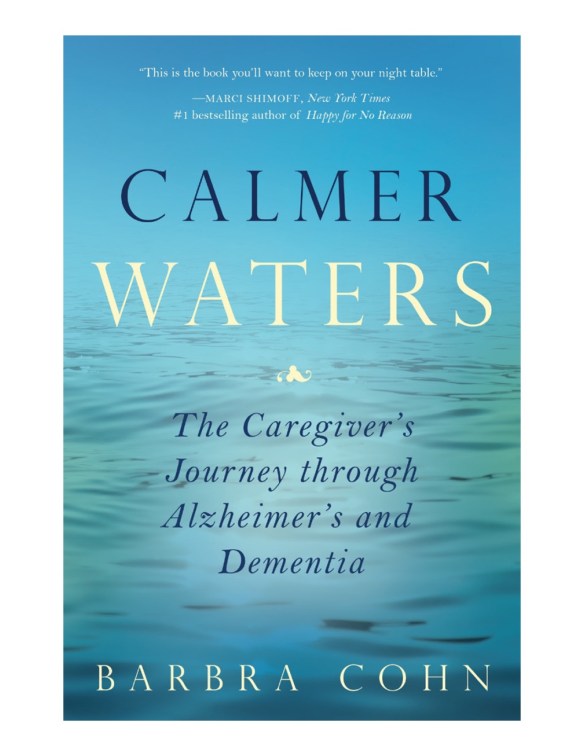
  • Use essential oils (lemon, peppermint, lavender, frankincense, bergamot, thyme, sandalwood, vetiver, myrrh) to boost immunity. For more information about the use of aromatherapy to reduce stress, improve immunity, reduce agitation, and to promote relaxation read chapter 18 “Aromatherapy” in “Calmer Waters: The Caregiver’s Journey Through Alzheimer’s & Dementia” by Barbra Cohn
  • Eat yogurt. 70% of your immune system lies in your gut. Probiotics are live bacterial microorganisms that populate the human gastrointestinal tract. They combat the daily bombardment of toxins and pathogens (bacteria, fungus, parasites, and viruses) that enter our digestive system every day through contaminated food and other toxins. Recent studies show that the bacteria in your gut can also affect your mental health, mood and stress levels. Fermented foods such as kombucha, Greek yogurt, kefir, sauerkraut, miso, cottage cheese are probiotics. Probiotic bacteria colonize the digestive tract with good bacteria. Prebiotics are the food and nutrients that feed probiotics. Prebiotic fiber is found in fruits and vegetables such as artichokes, jicama, wild yams, onions and garlic, asparagus, beans, oats, chicory root and Jerusalem artichokes. Prebiotics support mineral absorption, vitamin utilization, and healthy blood sugar levels. Your gut needs both pro- and prebiotics in order to stay healthy and keep you healthy.
  • Drink mineral broth. It helps alkalinize the body and warm the system. It also helps counter the negative effects of stress. Have it as a bowl of soup or sip it throughout the day. Use your vegetables scraps or chop 2 cups yams, 1 medium potato, 1 cup zucchini, 1 cup cabbage, 1 cup green beans, 2 cups celery, 1 cup onions. Add herbs, garlic, parsley–anything you like. Place in a large pot, cover with water, bring to a boil, turn down to a simmer, and cover for 3-5 hours. For more information read chapter  31 “Nutrition” in “Calmer Waters: The Caregiver’s Journey Through Alzheimer’s & Dementia” by Barbra Cohn

BarbraCohn__

10 Ways caregivers can reduce stress and feel instant relief

Spa still-life.

June is Alzheimer’s & Brain Awareness Month, and in celebration of the anniversary of the release of my book “Calmer Waters: The Caregiver’s Journey Through Alzheimer’s & Dementia” this month I will be posting ways that caregivers can relieve stress, feel better and more energetic, and forge a stronger connection to the person they lovingly care for.

  1. Before you get out of bed in the morning, breathe deeply and for a minute or two repeat an affirmation such as: “Today will be a good day.” “I am a loving, patient person.” “I’m feeling strong and healthy today.” “I am grateful for my family and friends.” “I am a kind, compassionate caregiver.”
  2. Eat a good breakfast. Your blood sugar is low when you awake after fasting for 6-8 hours. Support healthy blood glucose levels by eating protein, a complex carbohydrate, and colorful fruits or veggies for vitamins and antioxidants. A bowl of cereal with low or no-fat milk doesn’t cut it. As a caregiver you need the energy to get you through the morning. My favorite energy-boosting, neurotransmitter supporting breakfast is eggs (anyway you like them), sautéed kale or spinach with onions, a side of beans and melon or strawberries to finish it off. Yes, it sounds like a lot, and it is. But the portions can be small and you can use your left-over veggies from dinner the night before. Of if you want a lighter breakfast during summer, have a protein smoothie with yogurt, protein powder and fruit. Just make sure that whatever you eat includes high-quality protein.
  3. Go for a walk. If your care partner is ambulatory, take him or her with you. Research published in the March 2017 issue of “Cell Metabolism” found that a brisk walk could help slow the aging process. In “Calmer Waters,” researcher Monika Fleshner, PhD writes “Based on the research that my colleagues and I have done in the past thirteen years, we know that regular physical activity promotes stress robustness (resistance to stress) and changes the way the brain and body respond to stressors. . . If you are highly conditioned from a regular exercise routine, then you can respond better psychologically and physically.” (pg. 174, “Calmer Waters”)
  4. Sing in the shower, sing with your care partner, sing in a spiritual setting. “Music engagement can help you connect with your loved ones and care partner. Oxytocin, the chemical in our brain that is released during intimate interactions such as breastfeeding and intercourse, helps us to form trust and bonds with other humans. It is fascinating that this chemical is also emitted when people sing and make music together,” says neurologic music therapist Rebekah Stewart, MA. (pg. 224 “Calmer Waters”)
  5. Stay present. Learning how to stay present enhances how you relate to the person you are caring for, allowing you to create community with that person. The simple act of breathing with someone—of matching your breath to his or hers—enables you to create a spiritual connection with that person.
  6. Create a soothing space. Light a candle, enjoy a vase of fresh flowers, light incense, listen to uplifting music.
  7. Use aromatherapy oils to uplift the spirit and calm you down. Explore the variety of essential oils which can be used in a diffuser, spritzed on a pillow case, shirt collar or handkerchief or tissue that you can tuck in your shirt pocket.
  8. Dance as though no one is watching you. Dance alone in your living room to your favorite music, or with your care partner. It is an easy way to get the blood flowing, loosen up stiff muscles, and a fast and easy way to uplift your mood.
  9. Get a dog (if you don’t have one). “Animal Assisted Therapy is recognized by the National Institute of Mental Health as a type of psychotherapy for treating depression and other mood disorders. Spending time with an animal seems to promote a sense of emotional connectedness and well-being. Touching and playing with animals is a wonderful way for families coping with Alzheimer’s disease to experience joy, fun, and laughter,” says Diana McQuarrie, Founder and Executive Director Emeritus of Denver Pet Partners. (pg. 107 “Calmer Waters)
  10. Laugh. Charlie Chaplin once said that “A day without humor is a day wasted.” No matter how hard things seem, even if you are a caregiver to someone who has been ill for many years, try to find the humor in everyday things. My husband had Alzheimer’s disease and toward the end of his life he had trouble eating a sandwich. Once he asked, “What is this?” after I handed him a chicken salad sandwich. When I told him what it was he responded by throwing the sandwich across the table and exclaiming, “This chicken is dead!” I burst out laughing and because laughter is contagious so did he. Watch YouTube funny videos of animals, children, etc. when you’re feeling down. You will soon be laughing and the endorphins will flow and uplift your mood.

How lack of sleep can lead to osteoporosis . . . and what to do about it.

Radiography

May is Osteoporosis Awareness Month, and just when we thought we didn’t need one more thing to worry about, The Endocrine Society has published a new study linking prolonged sleep disturbance with bone loss in men.

The study researchers found that healthy men had reduced levels of a marker of bone formation in their blood after just three weeks of restricted sleep and circadian disruption similar to that seen in jet lag or night shift work. A biological marker of bone resorption, or breakdown, was unchanged.

“This altered bone balance creates a potential bone loss window that could lead to osteoporosis and bone fractures,” said lead investigator Christine Swanson, M.D., an assistant professor at the University of Colorado in Aurora, Colorado.

“If chronic sleep disturbance is identified as a new risk factor for osteoporosis, it could help explain why there is no clear cause for osteoporosis in the approximately 50 percent of the estimated 54 million Americans with low bone mass or osteoporosis,” Swanson said.

Inadequate sleep is also prevalent, affecting more than 25 percent of the U.S. population occasionally and 10 percent frequently, the Centers for Disease Control and Prevention report.

The 10 men in this study were part of a larger study that some of Swanson’s co-authors conducted in 2012 at Brigham and Women’s Hospital in Boston, Mass. That study evaluated health consequences of sleep restriction combined with circadian disruption. Swanson defined circadian disruption as “a mismatch between your internal body clock and the environment caused by living on a shorter or longer day than 24 hours.”

Study subjects stayed in a lab, where for three weeks they went to sleep each day four hours later than the prior day, resulting in a 28-hour “day.” Swanson likened this change to “flying four time zones west every day for three weeks.” The men were allowed to sleep only 5.6 hours per 24-hour period, since short sleep is also common for night and shift workers. While awake, the men ate the same amounts of calories and nutrients throughout the study. Blood samples were obtained at baseline and again after the three weeks of sleep manipulation for measurement of bone biomarkers. Six of the men were ages 20 to 27, and the other four were ages 55 to 65. Limited funding prevented the examination of serum from the women in this study initially, but the group plans to investigate sex differences in the sleep-bone relationship in subsequent studies.

After three weeks, all men had significantly reduced levels of a bone formation marker called P1NP compared with baseline, the researchers reported. This decline was greater for the younger men than the older men: a 27 percent versus 18 percent decrease. She added that levels of the bone resorption marker CTX remained unchanged, an indication that old bone could break down without new bone being formed.

“These data suggest that sleep disruption may be most detrimental to bone metabolism earlier in life, when bone growth and accrual are crucial for long-term skeletal health,” she said. “Further studies are needed to confirm these findings and to explore if there are differences in women.”

What to do about it?

The first line of defense is to improve sleep hygiene. Find more ways to get a good night’s sleep in my book “Calmer Waters: The Caregiver’s Journey Through Alzheimer’s & Dementia,” (Blue River Press) available wherever books are sold.cropped-front-cover-42316.jpg

  1. Exercise early, not in the last two hours before going to bed. Regular exercise has been shown to help people fall asleep faster and benefit from deeper and more restful sleep.
  2. Alleviate the stress and fatigue of the day with safe, proven herbs such as passion flower, magnolia, and valerian, and amino acids taurine, theanine and GABA, and melatonin which have been scientifically shown to produce a gentle calming effect on the whole physiology.
  3. Get thyself outside! Researchers found that bright light in the early morning and avoidance of light in the evening promotes a healthy circadian rhythm, whereas bright light in the evening disrupts the sleep cycle. And make sure you sleep with the lights off in you room.
  4. People with stressful lives often take their stress into bed with them and are unable to turn off the mental chatter. Eat dinner earlier, and don’t watch an exciting or scary movie before bed (that goes for reading matter as well), and certainly do not smoke, or drink alcohol or caffeine in the evening.
  5. Go to bed earlier. Research shows that the hours of sleep before 2 a.m. are more rejuvenating than all the hours after.
  6. Take a warm bath with soothing lavender oil to help you unwind.
  7. Establish a regular bedtime, but don’t go to bed if you feel wide awake.
  8. Once in bed, use creative imagery and relaxation techniques to pacify your mind.
  9. Avoid staying in bed for long periods of time while awake, or going to bed because of boredom.
  10. Take your TV or computer out of your bedroom. If not, your brain becomes used to the stimulation and starts to expect it when you are there. This makes it harder for you to fall asleep.
  11. A snack before bedtime helps many people. Foods such as warm milk, turkey, tuna, nuts, banana, grapefruit, dates and figs are high in the amino acid L-tryptophan, which promotes the production of serotonin, a natural relaxant. Avoid eating heavy meals at least two hours prior to going to sleep.
  12. Sex can be a natural sleep inducer for some people.
  13. Avoid emotional upset or stressful situations prior to bedtime.
  14. Relax with an inspirational book, soft music, and a cup of herbal tea.
  15. Talk with your health care provider if you’ve tried the above and are still having difficulty falling asleep, awaken several times throughout the night, have early morning awakenings or have marked difficulty getting out to bed in the morning.
  16. Good night, sleep tight.

Easy ways to calm down crazy full moon behaviors

Silhouette of full moon over family homes in typical neighborhood

The human body is 55 to 78% water (depending on sex and age) so it makes sense that the gravitational pull of the moon would affect us, right?  Many scientists point out that the biological tide theory doesn’t hold. On The Skeptics Dictionary website Robert Todd Carroll says, “Given the minute and bounded mass of fluid contained within the human body, compared to the enormous and free-flowing mass of ocean water, and given the enormous distance to the moon, the lunar pull on the human body is negligible.”

Theories about the moon’s influence on animal behavior are more widely accepted. Although the topic of whether or not the moon affects human behavior is controversial, there is plenty of anecdotal evidence and some scientific evidence indicating that it does.

I, for one, have a difficult time sleeping around the full moon. And my husband, who suffered from Alzheimer’s disease, exhibited more agitated behavior when the moon was full.

Studies have shown that the lunar cycle has an impact on fertility, menstruation, and birth rate.  Admittance to hospitals and emergency units due to cardiovascular and acute coronary events, arterial hemorrhages in the stomach and esophagus, diarrhea, and urinary retention correlate with moon phases. Other events linked to human behavior, such as traffic accidents, crimes, and suicides, seem to be influenced by the lunar cycle.

In the 1600’s Sr. William Hale, a distinguished British physician and medical biographer, wrote, “The moon has a great influence in all diseases of the brain, especially dementia.” The British Lunacy Act of 1842, which dismissed crazy behavior as being caused by the full moon, built on his theory.  In fact, as recently as 1940 a British soldier who was charged with murder pleaded “moon madness.”

Alan M. Beck of Purdue University conducted a longitudinal study to objectively examine the lunar influence on the frequency, duration, and intensity of behaviors in individuals with Alzheimer’s disease.

He examined wandering, anxiety, physical aggression, and verbal confrontation. His study concluded that individuals with Alzheimer’s disease did, in fact, exhibit significantly more erratic behaviors during periods of the full moon, and that these behaviors were of greater duration during that time. The objective analysis that a lunar influence on behavior in Alzheimer’s individuals exists validates a long-standing belief held by many healthcare providers.

If you’re a caregiver for someone with dementia, you’ve probably seen some odd behavior in your loved one around the full moon. And if you have trouble sleeping or feel restless or anxious during the full-moon, you’ve personally noticed the effects.

Here are some ways to calm the nerves and odd behaviors during the full moon or anytime.

From Calmer Waters: The Caregiver’s Journey Through Alzheimer’s & Dementia--“Aromatherapy” chapter 18 by Laraine Kyle Pounds, RN, MSN, BSN, CMT.

Aromatherapy can be a resource of comfort to you and your care partner by providing an easy, natural way to reduce stress and anxiety and uplift mood. The following oils can be used in a diffuser, or put in a bath or fragrance free moisturizer. They can also be sprayed on a pillow or handkerchief.

Citrus oils are generally refreshing and uplifting for the mind and emotions, relieve stress and anxiety, and are useful for odor management and appetite support. Consider: bergamot, grapefruit, lemon, and orange.

Floral oils are often used as a personal fragrance and are useful to relieve anxiety, depression, and irritability. These oils are useful as an inhaler, in a body lotion, and for the bath. Consider: clary sage, geranium, lavender, rose, and ylang ylang.

Tree oils are revitalizing with immune boosting properties, ease respiratory congestion, and are supportive to breathing ease. They are useful for pain relief, skin infections, and odor management, and can relieve nervous exhaustion and depression. Consider: eucalyptus (Eucalytpus citriodora or globulus), pine needle, sandalwood, or Tea Tree.

Herbal remedies

A nervine is a plant remedy that has a beneficial effect upon the nervous system.  Nervines are especially useful during times of stress because they have a strong relaxing and calming effect without producing a dulling, “hang-over” side effect.  They also tone and restore the nervous system to a more balanced state.  Some nervines are also anti-spasmodic, meaning they relax the peripheral nerves and the muscle tissue, which in turn has a relaxing effect on the whole system.

The main types of nervines are tonics, relaxants, and stimulants.

  • Nervine Tonics – are particularly helpful for strengthening the nervous system and restoring balance. In addition to having a relaxing effect, they have a vaso-dilating action on the blood vessels of the brain.  This increases oxygen availability to brain cells and helps with mental agility and mood.
  • Nervine Relaxants – are especially beneficial for short-term use, for example in treating mild depression or acute anxiety. “This group of nervines are most important in times of stress and confusion, alleviating many of the accompanying symptoms. They should always be used in a broad holistic way, not simply to tranquillize.  Too much tranquilizing, even that achieved through herbal medication, can in time deplete and weigh heavily on the whole nervous system,” says renown herbalist David Hoffman.
  • Nervine Stimulants– are used as a restorative “pick-me-up” when you need an energetic boost without that revved up feeling produced by caffeine.

Recommended nervines:

  • Passion flower- helps soothe anxiety, insomnia, tension headaches, muscle aches and spasms, pain, hyperactivity, epilepsy, and helps alleviate anger and lower blood pressure.
  • Skullcap – is antispasmodic and relaxing and is recommended to relieve headaches, mood swings, insomnia, premenstrual syndrome, and nervous tension and exhaustion.

The next time you’re feeling nervous, agitated, restless or hyped up, calm your nerves with a nervine herb or aromatherapy. If your loved one has Alzheimer’s or dementia and is on medication, please check with the physician to make sure they do not interact with the nervine herbs.  Use pure essential aromatherapy oils to lower risk of allergy.

If all else fails, you can always go outside and howl at the moon.


Studies showing we are affected by the full moon

1. More babies are born around the full moon. A study in Kyoto, Japan looked at 1007 natural births and found there was significant increase in births when the moon was closest to the earth. Results of this study suggest that the gravitational pull of the Moon has an  influence on the frequency of births.

2. Do you have trouble sleeping around the full moon? Sleep researcher Christian Cajochen at the Psychiatric Hospital of the University of Basel in Switzerland conducted a four-year lab study to see if he could show that it is physiologically true that many people have difficulty sleeping during the full moon.  His researchers monitored the brain activity, eye movements and hormone secretions of 33 volunteers in the lab while the participants slept. All the participants were healthy, good sleepers, and did not take any drugs or medication.Unexpectedly, the scientists found “the lunar cycle seems to influence human sleep, even when one does not see the moon and is not aware of the actual moon phase,” Cajochen said. After reviewing their data, the scientists found during the time of the full moon, brain activity related to deep sleep dropped by 30 percent. People also took five minutes longer on average to fall asleep, and they slept for 20 minutes less overall on full-moon nights. The volunteers felt as though their sleep was poorer when the moon was full, and they showed diminished levels of melatonin, a hormone known to regulate sleep and wake cycles. “It took me more than four years until I decided to publish the results, because I did not believe it myself,” Cajochen told LiveScience. “I was really skeptical about the finding, and I would love to see a replication.”


Barbra Cohn cared for her husband Morris for 10 years. He passed away from younger-onset Alzheimer’s disease in 2010. Afterward, she was compelled to write “Calmer Waters: The Caregiver’s Journey Through Alzheimer’s & Dementia” in order to help other caregivers feel healthier and happier, have more energy, sleep better, feel more confident, deal with feelings of guilt and grief, and to ultimately experience inner peace. “Calmer Waters” is available at AmazonBarnes & NobleBoulder Book StoreTattered Cover Book Store,  Indie Bound.org, and many other fine independent bookstores, as well as public libraries.