Keep your cool this holiday season and all year long

The holiday season is stressful for everyone, but especially for caregivers. Here’s a list of my favorite ways to destress any time of the year.

  1. Breathe! When we are stressed, we tend to hold our breath. Take a 5-minute break and sit down in a comfortable chair. Close your eyes and take a deep breath, in and out. Then focus on your breath and watch how your mind quiets down and your muscles relax. Then remember to breathe throughout the day. Whenever you feel yourself getting anxious or tight, take a deep breath and let it go.
  2. Drink water. We’ve heard it a million times but it’s always good to be reminded. Forget about sodas and limit the wine and alcohol. Staying hydrated, especially at this time of year, is vital to supporting the immune system and reducing inflammation. It’s also important to support healthy cognitive function and memory.
  3. Eat walnuts. A daily dose of about 9 whole walnuts or 1 Tbs. walnut oil helps your blood pressure from spiking during stress. Walnuts contain L-arginine, an amino acid that helps relax blood vessels, which in turn helps reduce hypertension.
  4. Drink green tea. L-Theanine is the main chemical constituent in green tea. It is an ideal nutritional aid for stress because it produces alpha-wave activity that leads to deep relaxation and mental alertness. This is especially important because to mitigate stressful situations, it’s important to remain calm and alert. Theanine also stimulates the release of the neurotransmitters GABA, serotonin, and dopamine, which help us feel happy, motivated, and calm. Green tea extract is available as a nutritional supplement, which might be easier and quicker to take, and it’ll save you a lot of trips to the bathroom.
  5. While we’re on the topic of “green,” be sure to eat green leafy vegetables for vitamin B and magnesium, both of which help your body cope with stress.
  6. Two handfuls of cashews (make that a small handful, please; one ounce of cashews contains 157 calories.) provide the equivalent mood-boosting effect as a therapeutic dose of Prozac because they are one of the highest natural sources of tryptophan, the precursor for serotonin, the feel-good neurotransmitter.
  7. Did someone mention dark chocolate? It reduces cortisol, the stress hormone that causes anxiety symptoms. Just a couple of pieces should do the trick.
  8. Walk around the block. Just getting out into fresh air will instantly relieve stress, and moving your body gets your blood pumping and will clear your mind.
  9. Light candles and play relaxing music while you eat. It will change the mood instantly.
  10. Aromatherapy is a miracle cure for stress and anxiety. Use a wall plug-in to diffuse the aroma of lavender oil to uplift mood, or place a few drops on a handkerchief and tuck it into a shirt pocket or on a pillow. Other oils to try: vetiver, frankincense, myrrh, orange, lemon, bergamot, and grapefruit.
  11. Music is the universal language, and it is also the universal stress reliever. Whether it’s jazz, classical, or hard rock that makes you feel better, by all means, play it loud, play it soft, dance to it, drive to it, go to sleep to it. It will definitely help.
  12. Getting the proper rest is vital to staying healthy and reducing stress. Prepare yourself for a deep night’s sleep by unplugging from electronics at least an hour before bed, taking an Epsom salt bath (put several drops of lavender oil in the water for added relaxation), and making sure the room temperature isn’t too warm.  Good night, sleep tight!

If you, or someone you care about, tend to suffer from stress, anxiety, or depression, these recommendations might just “take the edge off” and improve your quality of life … without the risk of side effects. May the holiday season begin!

Have a safe, healthy, and fun holiday season, and many blessings for a year filled with ease and peace.

For dozens more tools and techniques for reducing stress, uplifting mood, supporting your immune system and finding ways to connect on a spiritual and emotional level with the person you care for, read Calmer Waters: The Caregiver’s Journey Through Alzheimer’s and Dementia.

15 Ways to Help You Deal with Caregiver Guilt

You spend countless hours taking care of your loved one and have given up so many things. So why do you still feel guilty about not doing enough? Why do you continue to second-guess yourself?

You may ask yourself Am I doing enough? Did I make the right decision? What if… what if…? Here are ways to recognize your feelings, tips for accepting them, and ways to forgive yourself.

Why do you feel guilty?

  • Do you feel that you aren’t doing enough for your care recipient? Make a list of everything you do for the person you care for. Preparing a meal, shopping for groceries, driving to appointments, making a bed, doing laundry, making a phone call, sitting next to the person, even just giving a hug: the list adds up! You are doing a lot more than you think you are!
  • Are you guilty about your negative feelings? Resentment, anger, and grief are all normal. They are just feelings and they aren’t wrong. Feelings are complicated and you are entitled to them. You probably love the person you are caring for but the time you spend is precious and you might rather be outside gardening or hiking or traveling.
  • Do you feel bad about taking time for yourself? Don’t! If you don’t stay well, including eating and sleeping well, there’s a good chance you will get sick. And that is not going to help anyone! Please take some time for yourself. If you are a full-time caregiver, at least take a 15-minute walk every day. Get some respite care. Your local county social services department can most likely provide you with some options for help.
  • Are you feeling inadequate as a caregiver? The Alzheimer’s Association offers free classes on caregiving. “The Savvy Caregiver” is an excellent five-session class for family caregivers. It helps caregivers better understand the changes their loved ones are experiencing, and how to best provide individualized care for their loved ones throughout the progression of Alzheimer’s or dementia.
  • Do you resent losing personal time for meeting with friends, exercising, painting, playing an instrument, or traveling? It’s normal and natural to feel like you’re missing out on the things that bring you enjoyment. Try to carve out at least an hour or two a week where you can do whatever you want to do.
  • Do you have unresolved issues that stem from your childhood that get in the way of your feelings for the person you’re caring for now?
  • Are you comparing yourself to other caregivers? For instance, if you’re in a caregiver group you may be in awe of the amount of time another caregiver spends taking care of a spouse or how many hours she sits next to her husband in a memory care home. You are YOU, you’re unique and have different needs, a different history, and a different relationship with the person you’re caring for. Don’t compare yourself with anyone.
  • Do you have past unresolved issues with the person you’re caring for?

Tips for easing guilt

  • Ask yourself what’s bothering you. Talk with a close friend who will not judge you, or with a professional therapist, clergyperson, spiritual teacher, or intuitive guide. Talk about your guilt until you feel your body release the tension that is stored in your muscles and cells.
  • Remember that you are human and not perfect. No one expects you to perform with absolute clarity and grace all the time.
  • You cannot control everything all the time. You are doing the best that you can with the information, strength, and inner resources that you have.
  • Join a support group. Caregivers share many of the same problems and issues. A support group meeting can be a safe place where you will not be judged.
  • Have an “empty chair” dialogue by speaking out loud and pretending that your care partner is in the chair next to you. Express your feelings openly and wholeheartedly. Ask for forgiveness if you feel that you wronged your loved one in any way.
  • Write down your thoughts and feelings. Journaling is a wonderful, inexpensive way to release your concerns and worries on paper. It’s available when your therapist and best friend are not, and you can do it anywhere at your leisure.
  • Strong feelings of guilt, remorse, and grief will diminish over time.  If they continue to haunt you, seek professional help.

Barbra Cohn cared for her husband Morris for 10 years. He passed away from younger-onset Alzheimer’s disease in 2010. Afterward, she was compelled to write “Calmer Waters: The Caregiver’s Journey Through Alzheimer’s & Dementia”–winner of the 2018 Book Excellence Award in self-help– in order to help other caregivers feel healthier and happier, have more energy, sleep better, feel more confident, deal with feelings of guilt and grief, and to ultimately experience inner peace. “Calmer Waters” is available at AmazonBarnes & NobleBoulder Book StoreTattered Cover Book Store,  Indie Bound.org, and many other fine independent bookstores, as well as public libraries.

10 ways for caregivers to reduce holiday stress

Happy holidays! Thanksgiving is almost here! It’s almost inevitable that most of us feel more stressed during the holiday season. There’s always so much to do if you’re planning to get together with friends and family. And for those who are grieving or alone, the stress can be debilitating. If you’re a caregiver, you’re undoubtedly even more stressed.

The most important thing is to take care of YOU. If you get stressed and exhibit anxiety, those around you are going to feel it. It becomes a vicious cycle. You get stressed, and then the person you care for may get irritable, nervous, or anxious.

Make this your mantra: eat healthily, drink water, take a daily walk, and sleep well. It sounds easy, but how do you do that when your time is limited and you feel stretched in every which way.

Or how do you take care of yourself when you’re so depressed it’s hard to get out of bed? (This is a huge topic that I won’t address here, but you might want to read: Have you tried any of these natural ways to combat depression? https://barbracohn.2018/10/03/have-you-tried-any-of-these-natural-ways-to-combat-depression/

  1. Make a pot of soup that will last several days. Lentil, split pea, vegetable, chicken, butternut squash, and tomato soups are chockful of goodness. See below for a yummy recipe.
  2. Do you really need to drink 8 glasses of water each day? According to an article that recently appeared in the New York Times, the answer is no. It depends on a lot of things: how big you are, how active you are, and how much liquid you’re getting through foods and other drinks such as tea and coffee. I had always thought that caffeinated tea and coffee dehydrate you. But according to this article they don’t. Juicy fruits such as oranges, melons, and pears (not to mention summer fruits), contribute water to your total intake. Just make sure that you’re drinking enough so that you don’t get to the point where you feel thirsty or where your lips feel dry.
  3. Exercise is vital to overall health and stress reduction. Whether you live in a cold or hot climate, dress appropriately and find at least 15 minutes a day to get outside and walk.
  4. Show your care partner (the person you care for) a bit of extra attention if you’re able to. Take them for a drive to see holiday lights. Have an afternoon tea in a charming café. Visit your care partner’s best friend, or have them come for a visit. Buy a new CD of their favorite music and play it for them. Light candles at dinnertime. Have them help you with decorations, if possible.
  5. Plan a visit from a music therapist or animal-assisted (AAT)therapist, or find out where you might find them visiting facilities.
  6. Aromatherapy can be a resource of comfort to you and your care partner by providing an easy, natural way to reduce stress and anxiety and uplift mood. To make sure you are buying a pure essential oil and not synthetic fragrance oil, look for the botanical name of the plant and the phrase “pure essential oil” on the label. Essential oils can be used in a wide variety of ways, but the most common methods are by inhalation or topical use, such as lotion, body oil, or in a bath. My favorite method which I used for my husband is an electric micro-mist diffuser, and available by mail order or at health food stores. These disperse essential oils into the air in a cool mist or can be gently warmed in a candle-heated aroma lamp that releases the aroma into the air. Another easy way is to add 30-40 drops of essential oils to a 4-ounce water spritz bottle. Favorite oils for reducing stress and anxiety include: lavender, Holy basil, clary sage, geranium, rose, and ylang ylang. Citrus oils uplift the mind and emotions, relieve stress and anxiety, and are useful for appetite support: bergamot, grapefruit, lemon, and orange.
  7. Making art can help you regain a sense of balance. If you’re feeling out of control, and are inclined to create art, set aside a table just for art and make it sacred. Gather your materials and have them easily accessible so that the space is prepared for you to focus on the “now” without a lot of distraction. It’s amazing how making art can melt stress once you get into the creative zone. The same goes for playing an instrument. It doesn’t matter what is going on in the world or how I feel, when I sit down at the piano, everything becomes part of the past and I’m able to enjoy the moment. It actually becomes a meditation.
  8. Speaking of meditation, the buzzword these days is “mindfulness.” There are numerous apps and classes that can teach you how to stay present and act with kindness and compassion. You can also take a meditation class such as Transcendental Meditation, where you learn how to meditate twice a day for 20 minutes. TM has been proven to reduce blood pressure, and help the body recharge by reducing stress. It’s easy and anyone who can think a thought can do it.
  9. Keep it simple. You don’t have to make an elaborate feast (unless you’re a cook and love to do that) to make the holidays special. If you want to make it really easy on yourself, order a meal for the number of people at your table. Grocery stores like Whole Foods provide dinners that are yummy and healthy (and yes, a little expensive). Or make the essentials and buy a pie.
  10. This holiday season stop and smell the flavors and enjoy the little things: a walk in the woods, a new baby’s smile, a toddler’s romp, a new sweater, or a pair of socks. Get out the photo albums and reminisce. Watch funny YouTube videos of animals and children. Watch a comedy together. Borrow your neighbor’s dog to take on a walk. Walk in the snow (please wear treaded boots so you don’t fall). Enjoy the moment because time passes quickly and what’s here this year may not be here next year.

While most families are hoping to get together for the first time in a couple of years due to COVID, it’s important to keep abreast of the latest health and safety directives in your area. The number of COVID cases is on the rise again. Please wear a mask when flying, traveling by train or bus, and when you’re in crowded places such as a grocery store. Get a COVID booster and seasonal flu shot. If you feel sick, please stay home! There’s nothing like exposing your loved ones to an illness and having them get sick to make you feel guilty and everyone stressed.

One of my favorite soup recipes to enjoy throughout the winter

Pasta y Fagioli—a one-pot meal, 4 servings

  • 2 tbsp olive oil
  • 1 large onion, chopped
  • 3 carrots cut into 1/4 inch pieces
  • 2 stalks of celery, cut into 1/4-inch pieces
  • 1 leek, peeled and cut into 1/4-inch pieces (discard the top, tough stalk or keep to use when making vegetable broth)
  • 1 zucchini, cut into 1/4-inch pieces
  • 1 yellow squash, cut into 1/4-inch pieces
  • 2 large garlic cloves, finely chopped
  • Herbs of your choice: basil or thyme
  • 1 28-ounce can of chopped tomatoes
  • 1 quart of stock –vegetable or chicken. Add water if needed to cover the veggies
  • 2 cans of white beans (navy, butter, or cannellini)
  • 8 oz of pasta of your choice
  • salt and pepper to taste
  • Grated parmesan cheese

Heat the oil in a soup pot on medium. Add the onion and cook for about 5 mins., occasionally stirring. Add the other vegetables, until they begin to soften, about 8 minutes. Stir in the garlic, and cook for 2 minutes. Add the broth and tomatoes and their juice.

Separately, cook the amount of pasta you want to put in the soup. Keep the pasta separate or it will turn to mush. Add a serving of pasta to the soup and top with grated cheese. Serve with bread and salad. Delicious!

Happy Thanksgiving!

Barbra Cohn cared for her husband Morris for 10 years. He passed away from younger-onset Alzheimer’s disease in 2010. Afterward, she was compelled to write “Calmer Waters: The Caregiver’s Journey Through Alzheimer’s & Dementia”–winner of the 2018 Book Excellence Award in self-help– in order to help other caregivers feel healthier and happier, have more energy, sleep better, feel more confident, deal with feelings of guilt and grief, and to ultimately experience inner peace. “Calmer Waters” is available at AmazonBarnes & NobleBoulder Book StoreTattered Cover Book Store,  Indie Bound.org, and many other fine independent bookstores, as well as public libraries.

How would you rate yourself as a caregiver?

It’s been 12 years since my husband passed away from younger-onset Alzheimer’s disease. Even now ask myself if I could have done more for him. I still have guilt, even though I saw a therapist for the last three years of his life who said to me, “If a friend were telling you what you’re telling me, what would you say to her?”

I’d tell her, “You’re doing the best that you can.” My therapist nodded his head and reminded me that I was doing the very best that I knew how, and physically was able to.

I was pragmatic and philosophical about my husband’s Alzheimer’s. I was really good about taking him to his doctor appointments and utilizing every complementary healing modality that was available, such as acupuncture, massage, and even some pretty far-out techniques which I don’t even remember the name of. We hired gentle-touch practitioners, psychic healers, and astrologers. You name it. We tried them all. I even bought an expensive stress-reducing massage bed that emits infrared light and has jade balls that massage the spine by riding from the neck to the ankles.

Did these modalities help? I think so. They certainly helped reduce the stress that we both felt. Did they delay the symptoms of Alzheimer’s? Probably not, but my husband outlived his prognosis by two years, according to his doctor, so I have to believe that a good diet, nutritional supplements, and the support of loving friends and family played a huge role.

Yet, still, I think there were a few things I could have done better. I could have worked harder to acknowledge Morris’s reality. By that I mean I could have done a better job of redirecting him when he got anxious or worried. I realize that it’s easier to say this now, more than a decade after he died. But I wish I had more skill and practice in switching the topic from his obsession about having his car keys taken away, or his discomfort when I’d take him for a ride in the car and he’d complain about every bump in the road.

I wish I had shown him more affection by holding his hand or rubbing his shoulders. I actually told him one day at the breakfast table that I could not have an intimate physical relationship with him anymore because I felt more like his mother than his wife. This is a hard thing for me to admit, and I feel so sad that I said this to him. The reason I’m writing it here is to tell you that you don’t have to be 100% honest with what you express to the loved one you are caring for. It’s okay to withhold things because if your loved one has dementia s/he is already having difficulties processing normal everyday activities. There’s no need to get into a deep philosophical discussion or one in which you have to express what you are going through. Create a time and space for that to happen with a dear friend or a therapist.

If you feel guilty or are unsure of whether you’re doing enough ask yourself these questions:

  • Do you feel that you aren’t doing enough for your care recipient? Make a list of everything you do for the person you care for. Preparing a meal, shopping for groceries, driving to appointments, making a bed, doing laundry, making a phone call, sitting next to the person, even just giving a hug: the list adds up! You are doing a lot more than you think you are!
  • Are you guilty about your negative feelings? Resentment, anger, and grief are all normal. They are just feelings and they aren’t wrong. Feelings are complicated and you are entitled to them. You probably love the person you are caring for but the time you spend is precious and you might rather be outside gardening or hiking or traveling.
  • Do you feel bad about taking time for yourself? Don’t! If you don’t stay well, including eating and sleeping well, there’s a good chance you will get sick. And that is not going to help anyone! Please take some time for yourself. If you are a full-time caregiver, at least take a 15-minute walk every day. Get some respite care. Your local county social services department can most likely provide you with some options for help.
  • Are you feeling inadequate at a caregiver? The Alzheimer’s Association offers free classes on caregiving. “The Savvy Caregiver” is an excellent five-session class for family caregivers. It helps caregivers better understand the changes their loved ones are experiencing, and how to best provide individualized care for their loved ones throughout the progression of Alzheimer’s or dementia.
  • Tips for easing guilt
  • Ask yourself what is bothering you. Talk with a close friend who will not judge you, or with a professional therapist, clergyperson, spiritual teacher, or intuitive guide. Talk about your guilt until you feel your body release the tension that is stored in your muscles and cells.
  • Remember that you are human and not perfect. No one expects you to perform with absolute clarity and grace all the time.
  • You cannot control everything all the time. You are doing the best that you can with the information, strength, and inner resources that you have.
  • Have an “empty chair” dialogue by speaking out loud and pretending that your care partner is in the chair next to you. Express your feelings openly and wholeheartedly. Ask for forgiveness if you feel that you wronged your loved one in any way.
  • Write down your thoughts and feelings. Journaling is a wonderful, inexpensive way to release your concerns and worries on paper. It’s available when your therapist and best friend are not, and you can do it anywhere at your leisure.
  • Strong feelings of guilt, remorse, and grief will diminish over time.  If they continue to haunt you, seek professional help.

I’m still working–on forgiving myself for not being the perfect caregiver. I’m not overwhelmed by it, and I’ve recreated a wonderful, fulfilling life for myself. But I remember my therapist’s words, “You’re doing the best that you can.” I know I did, and that just has to be good enough.

The Alzheimer’s Association offers programs especially designed to benefit people caring for a family member or friend living with dementia by providing more understanding and tools to help navigate the journey. For more information contact 800-272-3900, alz.org.

Barbra Cohn cared for her husband Morris for 10 years. He passed away from younger-onset Alzheimer’s disease in 2010. Afterward, she was compelled to write “Calmer Waters: TheCaregiver’s Journey Through Alzheimer’s & Dementia”—Winner of the 2018 Book Excellence Award in Self-Help—in order to help other caregivers feel healthier and happier, have more energy, sleep better, feel more confident, deal with feelings of guilt and grief, and to ultimately experience inner peace. “Calmer Waters” is available at AmazonBarnes & NobleBoulder Book StoreTattered Cover Book Store,  Indie Bound.org, and many other fine independent bookstores, as well as public libraries.

Cataract surgery reduces dementia risk

It seems that almost all my friends are needing cataract surgery. And that’s probably a good thing. Because studies are indicating that cataracts increase your risk of developing dementia.

What is cataract surgery?

Nine in ten people develop cataracts by the time they’re 65, and an estimated 2 million (mostly older) Americans get cataract surgery every year.

A cataract is an opacification or clouding of the natural lens of the eye. The surgery involves the removal of the lens and replacement with an intraocular lens or artificial replacement for the lens of your eye. It’s considered one of the safest, most effective, and most common procedures performed today.

Research shows a link between vision loss and dementia

A recent study in JAMA Internal Medicine analyzed the relationship between cataract surgery and the risk of developing dementia. The researchers discovered that people who had cataract surgery had a 29 percent lower risk of developing dementia when compared to people who didn’t have the surgery. https://pubmed.ncbi.nlm.nih.gov/34870676/

The research also found that glaucoma did not affect the risk of dementia.

How does cataract removal protect brain health?

  • Cataracts can reduce vision, which may lead to depression. Depression is a risk factor for dementia.
  • One study found that the integrity of the eye is essential for the structure and function of the brain. “Cataract patients often present with accelerated age-related decreases in brain function, but the underlying mechanisms are still unclear.” https://pubmed.ncbi.nlm.nih.gov/29548900/ Vision impairment can lead to reduced sensory input to the brain, and this leads to less brain stimulation and loss of brain function.
  • People who have vision loss may be less engaged in physical activity and social interaction. This can lead to an increased risk of dementia.

Ways to help prevent cataracts

  • Eat a Mediterranean-based diet including foods that are high in vitamin C, vitamin E, lutein and zeaxanthin. Low levels of lutein and zeaxanthin are associated with cataracts, whereas higher levels help to reduce the risk of developing cataracts.
  • Lutein and zeaxanthin are carotenoids and are found in spinach, Swiss chard, kale, parsley, pistachios, green peas, egg yolks, sweet corn, and red grapes. They are best absorbed when eaten with a healthy fat such as olive oil or avocado.
  • Wear sunglasses to protect your eyes from UV rays.
  • Quit smoking. Smoking increases the free radicals superoxide and hydroxyl radicals that damage the lipids and proteins in the eyes. This causes deposits to form on the lens of the eyes and leads to cataract formation.
  • Maintain healthy blood sugar levels. People with diabetes are more likely to develop cataracts.
  • Restrict consumption of alcohol, which can increase the risk of cataracts by increasing the body’s inflammatory response, free radical production in the eyes, and dehydration. Dehydration affects the proteins in the lens of your eyes.
  • Get regular eye exams.

Get more bang for your buck

If your eye doctor is suggesting that you have surgery to remove cataracts, do it sooner than later. Because cataract surgery will not only sharpen your vision, it may very well sharpen your mind.

Barbra Cohn cared for her husband Morris for 10 years. He passed away from younger-onset Alzheimer’s disease in 2010. Afterward, she was compelled to write “Calmer Waters: TheCaregiver’s Journey Through Alzheimer’s & Dementia”—Winner of the 2018 Book Excellence Award in Self-Help—in order to help other caregivers feel healthier and happier, have more energy, sleep better, feel more confident, deal with feelings of guilt and grief, and to ultimately experience inner peace. “Calmer Waters” is available at AmazonBarnes & NobleBoulder Book StoreTattered Cover Book Store,  Indie Bound.org, and many other fine independent bookstores, as well as public libraries.

The memory care home wants to evict my loved one! What should I do?

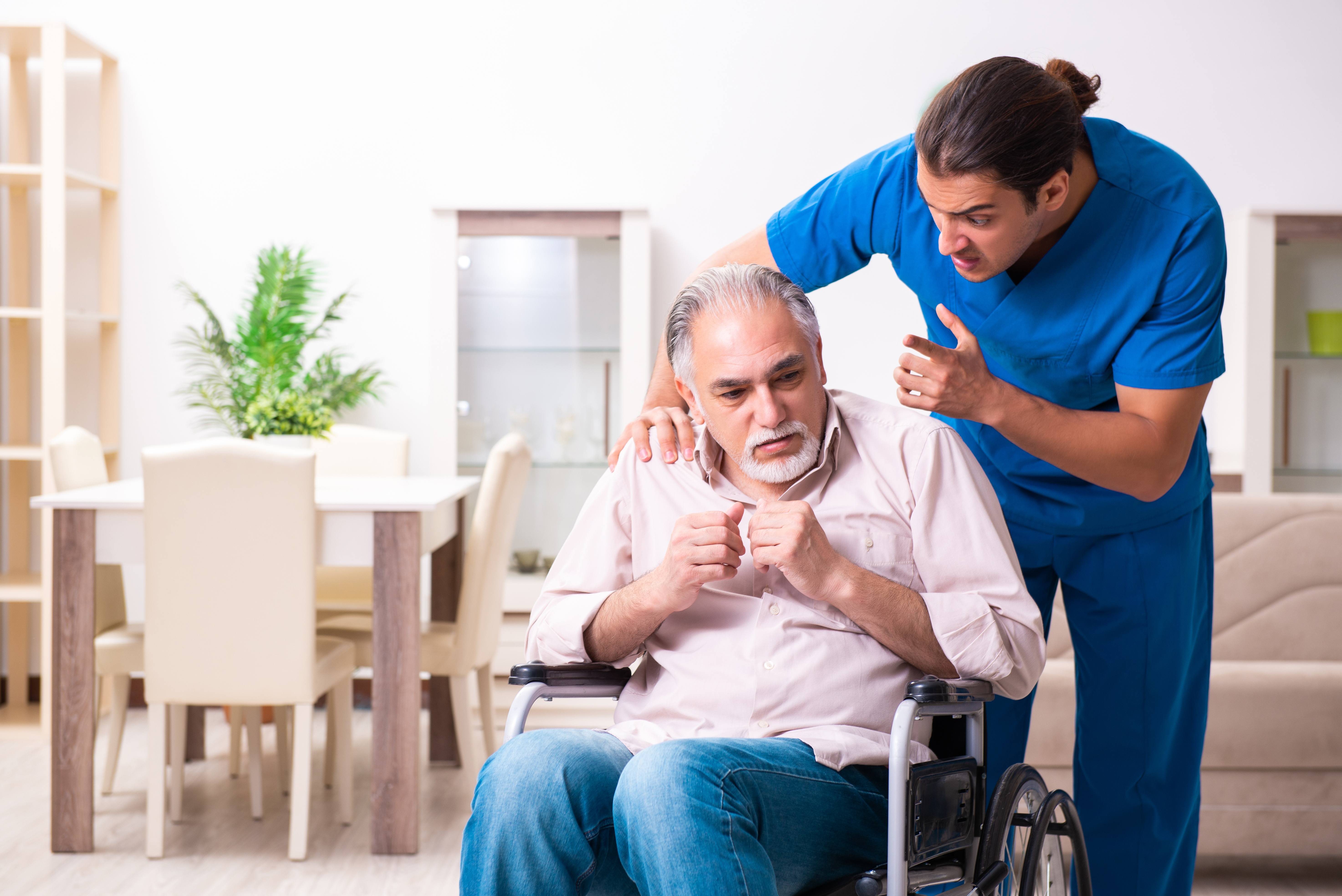
Caregiver yelling at man in wheel-chair

Sometimes a person with dementia will act out and strike the person who just happens to walk by, or the person who accidentally walks into their room. Or, the aggressor might bite another person. Aggressive behaviors aren’t that unusual, but sometimes they get out of control. If they continue, the director of the memory care home will give the family a warning, and if the behavior isn’t resolved, the patient may be asked to leave.

Before things get out of control, there are modalities that can be used to help calm things down. Please read Chapter 18 “Aromatherapy” in Calmer Waters: The Caregiver’s Journey Through Alzheimer’s and Dementia by Barbra Cohn (see below) on how essential oils can immediately diffuse a tense situation. The book contains 19 other healing modalities that really do work.

In our case, the care facility wanted my husband to leave because he became too needy. Even though the director assured me that the facility would be able to take care of him to the end of his Alzheimer’s journey when I signed the contract for him to move in, that’s not what happened.

After Morris had surgery for a kidney stone, he was unable to walk or toilet by himself. He couldn’t do much of anything anymore. He stopped talking and couldn’t feed himself. The facility where he had been for two years refused to accept him back from the hospital. The hospital discharged him on a Friday afternoon and we had to scramble for a facility that would take him. It was stressful and the new facility was awful. I begged the home where he had been to take him back, and they agreed, but with a big caveat. I had to hire a care person to be with Morris one-on-one because the facility didn’t have the staff to give him the extra care that he needed.

We hired extra care, but the cost became prohibitive. I moved Morris for the third time in four weeks to a different facility that specialized in end-stage Alzheimer’s. It was the perfect decision. He died there two weeks later, after having compassionate end-of-life care.

If things hadn’t gotten so crazy, and my husband hadn’t deteriorated as quickly as he did, I would have called my ombudsman to help me communicate with the first memory care home’s director. Her refusal to take Morris back after his hospitalization was virtually the same as kicking him out, and it was contrary to what was promised when I signed the initial contract: that they’d care for him until the end.

Contact your ombudsman

If you have any similar issues, contact your ombudsman. An ombudsman is someone who advocates for the health, safety, and rights of individuals in long-term facilities (LTC), and ensures that the residents are protected by the standards required under the Nursing Home Reform Law of 1987. Under the federal Older Americans Act, every state is required to have an Ombudsman Program that addresses complaints and advocates for improvements in the long-term care system. 

Unlawful evictions are one of the major complaints that an ombudsman deals with. The ombudsman will

If you can’t resolve a conflict or your concerns with the director of the facility or are uncomfortable, you can contact your ombudsman to:

  • Investigate suspected abuse (mental, physical, and emotional) of your loved one
  • Review inadequate staffing or training that should meet the level of care expected and promised
  • Discuss and resolve grievances that you and the staff have
  • Learn about your options and legal rights

Who can use an Ombudsman?

  • Residents of any nursing home or board and care facility, including assisted living facilities
  • A family member or friend of a nursing home resident
  • A nursing home administrator or employee with a concern about a resident at their facility
  • Any individual or citizen’s group interested in the welfare of residents
  • Individuals and families who are considering long-term care placement

How do I contact my Ombudsman?

Residential care communities must post the area’s ombudsman program contact information and responsibilities. You can also search for your state’s ombudsman by visiting the Elder Care Locator website (eldercare.acl.gov) or contact the Alzheimer’s Foundation of America’s (AFA) Helpline – 866-232-8484.

What if my loved one is asked to leave because of aggressive behavior?

First, try to figure out why your loved one is acting out. Does s/he have a urinary tract infection? Is s/he in pain because of a tooth abscess? Have a physician do a complete physical exam to rule out pain. Your loved one may be unable to articulate what is bothering them.

Be on the lookout for bruises, bedsores, stomach upset, missing personal items such as eyeglasses, or anything else that may be the cause of a change in behavior. Is another resident walking into your loved one’s room accidentally? Is loud music being played in the dining room? What about community TV shows? Are they violent, disturbing, or too loud?

Sadly, residents who have behavior issues are often given medications to control their outbursts. Try everything you can before resorting to those. My husband was given a sedating drug at one point and he became catatonic. As soon as I ordered the doctor to take him off the drug, Morris quickly reverted to his usual, pleasant self. When he would start to show agitation, I’d plug in an aromatherapy diffuser with a blend of oils that immediately calmed him down.

Essential oils can diffuse feelings of sadness, depression, anxiety, etc. Lavender oil is the most frequently used fragrance. You can also try bergamot, grapefruit, lemon, orange, clary sage, geranium, rose, and ylang-ylang, frankincense, and myrrh. Put the oil in a diffuser or spray bottle to mist your loved one’s collar or pillow. Find a fragrance that is pleasing to them.

It’s always in everyone’s best interest to try to solve things amicably. An attorney can help review your contract with the facility, especially when it comes to involuntary transfers and aggressive behavior. But hopefully, the situation won’t get to that point.

All the best to you in the new year,

Barbra

Barbra Cohn cared for her husband Morris for 10 years. He passed away from younger-onset Alzheimer’s disease in 2010. Afterward, she was compelled to write “Calmer Waters: The Caregiver’s Journey Through Alzheimer’s & Dementia”—Winner of the 2018 Book Excellence Award in Self-Help—in order to help other caregivers feel healthier and happier, have more energy, sleep better, feel more confident, deal with feelings of guilt and grief, and to ultimately experience inner peace. “Calmer Waters” is available at AmazonBarnes & NobleBoulder Book StoreTattered Cover Book Store,  Indie Bound.org, and many other fine independent bookstores, as well as public libraries.


If you suspect that you or a loved one has Alzheimer’s, you need to read this.

June is Alzheimer’s and Brain Awareness Month. If you suspect that you or a loved one might have Alzheimer’s disease, here’s what you need to know.

After decades of not making progress with pharmaceuticals for Alzheimer’s disease, researchers are finally coming up with some promising results. There’s a brand new blood test for the disease that you can take instead of going through a series of expensive and sometimes painful tests. And there’s a brand new drug that delays cognitive decline in early stage Alzheimer’s. We still don’t have a cure, but there are a number of clinical trials that someone diagnosed with Alzheimer’s can enroll in.

Why it’s important to get diagnosed early

For a full explanation, click here to read a blog I posted August, 20202. https://barbracohn.com/blog/page/2/

Here are the bullet points:

  • Cognitive problems can be caused by a number of physical conditions.
  • Cognitive symptoms may be reversible.
  • An early diagnosis is empowering as far as estate planning, and end-of-life planning, etc.
  • An early diagnosis is easier for the physician to make when the patient is able to answer questions.
  • Family and loved ones might be confused by particular behaviors which will be explained.
  • An early diagnosis allows individuals to take advantage of support groups, and caregivers to learn ways to better manage medications, the environment, etc.
  • Getting an early diagnosis provides the opportunity to enroll in a clinical trial.
  • The patient can prioritize what is important to them while they are still able to make decisions.

What new tests are available to detect Alzheimer’s?

PrecivityAD is the first blood test for Alzheimer’s to be cleared for widespread use and one of a new generation of such assays that could enable early detection of the leading neurodegenerative disease—perhaps decades before the onset of the first symptoms. The test uses mass spectrometry to detect specific types of beta-amyloid, the protein fragment that is the culprit in Alzheimer’s disease. As plaques in the brain build up, levels of beta-amyloid decline in the surrounding fluid. The levels can be measured in spinal fluid samples. The new blood test can determine where beta-amyloid concentrations are significantly lower. PrecivityAd is designed to be used for people 60 to 91 years old with early signs of cognitive impairment.

How it works

  • Your doctor orders the PrecivityAd blood test and schedules a blood draw appointment.
  • Your blood sample is sent to the lab for analysis by mass spectrometry.
  • Your doctor receives the report and discusses the results with you.

How much does it cost?

The test costs $1,250. Since it is new and is not currently covered by private insurance, Medicare or Medicaid, patients must pay out-of-pocket for the test. A six-month interest-free payment plan is available, and a financial assistance program is available for patients who medically and financially qualify. The assistance program can bring the costs down to between $25 and $400 for eligible patients.

Other causes for memory issues

One benefit of the PrecivityADTM blood test is that if Alzheimer’s markers
are not detected, additional costly tests may be avoidable and your physician can explore other causes for memory and cognitive issues. Other causes for memory issues include: hypothyroidism, head trauma or injury, certain medications or a combination of medications, emotional disorders, depression, strokes, amnesia, alcoholism, vitamin B012 deficiency, hydrocephalus, brain tumors, and other brain diseases.

New drug for delaying symptoms

The FDA recently approved a new drug for Alzheimer’s. Aducanumab isn’t a cure, but it’s the first drug to get this far in an approval process that actually modifies the underlying pathology of the disease, and helps delay cognitive decline in early stage Alzheimer’s. Read about it in my last post. https://wordpress.com/post/barbracohn.com/6470

Clinical research studies for people with early symptomatic Alzheimer’s

The objective of a clinical research study is to answer questions about the safety and effectiveness of potential new medications. These studies have to be completed before a new treatment is offered to the public. There are currently more than 3000,000 clinical studies taking place throughout the world.

For those who are qualified, taking part in research studies offers several benefits:

  • Getting actively involved in their own health care
  • Having access to potentially new research treatments 
  • Having access to expert medical care for the condition being studied, since investigators are often specialists in the disease area being studied
  • Helping others by contributing to medical research

One way to find information about clinical trials is by searching this website: http://www.clinicaltrials.gov. ClinicalTrials.gov is an interactive online database, managed by the National Library of Medicine. It provides information about both federally and privately supported clinical research. ClinicalTrials.gov is updated regularly and offers information on each trial’s purpose, who is qualified to participate, locations, and phone numbers to call for more information.

The Alzheimer’s Association also has a service called TrialMatch that provides customized lists of clinical studies based on user-provider information. The free, easy-to-use platform allows you to see which studies are a good fit for you or a family member.
Visit TrialMatch
. You can also call 800.272.3900 or email TrialMatch@alz.org to get started. You’re under no obligation to participate. You can reach out to researchers directly to sign up, or let researchers know that you are open to being contacted with more information about their study. You can also browse available clinical studies by location and type, or sign up to be notified when new studies are posted that are relevant to you.


Barbra Cohn cared for her husband Morris for 10 years. He passed away from younger-onset Alzheimer’s disease in 2010. Afterward, she was compelled to write “Calmer Waters: The Caregiver’s Journey Through Alzheimer’s & Dementia”—Winner of the 2018 Book Excellence Award in Self-Help—in order to help other caregivers feel healthier and happier, have more energy, sleep better, feel more confident, deal with feelings of guilt and grief, and to ultimately experience inner peace. “Calmer Waters” is available at AmazonBarnes & NobleBoulder Book StoreTattered Cover Book Store,  Indie Bound.org, and many other fine independent bookstores, as well as public libraries.

How to increase GABA, your brain’s calming chemical

Everyone is stressed out these days. But caregivers are dealing with pandemic stress on top of normal caregiving stress. And if you live in the West, you may be dealing with the stress of being evacuated because of wildfires, or smoke that is hampering your ability to breathe. Ask yourself this:

Are you feeling stressed and burned out?

Are you unable to relax or loosen up?

Do you feel stiff? Are your muscles tense?

Do you have a hard time falling asleep because your mind keeps racing?

If you answered yes, you could use of a boost of GABA.

What is GABA?

Gamma-Aminobutyric acid (GABA) is an amino acid that is produced in the brain and acts as a neurotransmitter, communicating information throughout your brain and body. GABA inhibits nerve cells from firing, and helps us to feel balanced, calm and relaxed.

GABA also:

  • Reduces mental and physical stress
  • Reduces anxiety
  • Eases muscle tension
  • Creates a calm mood
  • Supports balanced blood pressure
  • Promotes restful sleep
  • Regulates muscle tone
  • Uplifts mood

What are neurotransmitters?

Neurotransmitters are the brain chemicals that communicate information throughout your brain and body. The brain uses neurotransmitters to tell your heart to beat, your lungs to breathe, and your stomach to digest. They can also affect mood, sleep, concentration, weight, and can cause adverse symptoms when they are out of balance. Neurotransmitter levels can be depleted many ways. It is estimated that 86% of Americans have suboptimal neurotransmitter levels. Stress, poor diet–protein deficiency, poor digestion, poor blood sugar control, drug (prescription and recreational), alcohol and caffeine can deplete them. (Emmons, The Chemistry of Joy, 2006).

What depletes GABA?

Too many carbs and refined foods, and certain drugs and medications deplete GABA. If you rely on tobacco, marijuana, alcohol, Valium, sweets or starch, you probably have a GABA imbalance

A GABA deficiency often results in:

  • High anxiety, panic, worry
  • “Monkey mind” or a racing mind.
  • Difficulty falling and staying asleep

5 Ways to Boost GABA

  1. Eat these foods

The best foods for helping your body produce GABA, according to a May 2018 review published in Nutrients, include:

  • Cruciferous vegetables (broccoli, cabbage, cauliflower, Brussels sprouts)
  • Soy beans
  • Adzuki beans
  • Mushrooms
  • Spinach
  • Tomatoes
  • Buckwheat
  • Peas
  • Chestnuts
  • Sweet potatoes
  • Sprouted grains
  • Rice (specifically brown rice)
  • White tea

Fermented foods including kefir, yogurt, tempeh, sauerkraut, kimchi, and pickles help increase GABA levels. These foods may also boost GABA: whole grains, fava beans, soy, lentils, and other beans; nuts including walnuts, almonds, and sunflower seeds; fish including shrimp and halibut; citrus, tomatoes, berries, potatoes, and cocoa.

2. Meditation and yoga have a positive effect on GABA levels.

3. Passion flower, lemon balm and valerian help support GABA, and help you fall asleep if your mind is on overdrive. Infuse them in hot water for a soothing herbal tea.

4. Nutritional supplements support GABA. Make sure you let your physician know which supplements you take, since some may interfere with medications.

L-theanine is a relaxing amino acid found in green tea. It’s available as a nutritional supplement, or get it by drinking green tea.

Magnesium is the most important mineral for the heart, It supports healthy blood pressure, decreases food cravings, balanced blood sugar, nourishes and calms the nervous system, and protects the body from damage of stress. Besides food, Epsom salt baths are another way of getting magnesium–absorbed through the skin. Magnesium is found in dark, leafy greens, dark chocolate, avocados, nuts, legumes, tofu, seeds, whole grains, bananas, and some fatty fish.

Taurine is an amino acid that activates GABA receptors and encourages the release of GABA. It is found in dairy food, shellfish, and the dark meat of turkey and chicken. It is also taken as a dietary supplement.

GABA is available in amino acid from as a dietary supplement. It is questionable, however, if it is able to cross the brain barrier.

5. Exercise, and being outdoors, paying attention to your personal needs are important.

How to boost all your neurotransmitters

  • Eat a serving of high-quality protein with every meal and snack. Focus on complex carbohydrates, and eliminate junk foods (refined carbs).
  • Enjoy unlimited amounts of fresh veggies.
  • Eat a good breakfast!
  • Eat 3 balanced meals and 1-2 healthy snacks per day.

Complex carbohydrates, such as sweet potatoes, brown rice or oatmeal, allow your brain to gradually process more serotonin, the neurotransmitter that keeps us happy. Eating protein and healthy omega-3 fats, found in fish, walnuts and flax, will also improve mood. B vitamins, which are abundant in fresh leafy greens and in chemical-free, pasture-raised meat, are another important factor because they’re needed for serotonin production.

For more information about how to prevent caregiver burnout and ways to boost your neurotransmitters, visit: https://barbracohn.com/2019/07/03/preventing-caregiver-burnout-with-good-nutrition-and-foods-that-support-neurotransmitters/

Recommended Reading

  1. The Mood Cure, Julia Ross, MA
  2. The Edge Effect: Achieve Total Health and Longevity with the Balanced Brain, Eric Braverman, MD
  3. The Chemistry of Joy, Henry Emmons, MD
Barbra Cohn cared for her husband Morris for 10 years. He passed away from younger-onset Alzheimer’s disease in 2010. Afterward, she was compelled to write “Calmer Waters: The Caregiver’s Journey Through Alzheimer’s & Dementia”—Winner of the 2018 Book Excellence Award in Self-Help—in order to help other caregivers feel healthier and happier, have more energy, sleep better, feel more confident, deal with feelings of guilt and grief, and to ultimately experience inner peace. “Calmer Waters” is available at AmazonBarnes & NobleBoulder Book StoreTattered Cover Book Store,  Indie Bound.org, and many other fine independent bookstores, as well as public libraries.

Is it okay to leave a person with Alzheimer’s home alone?

Confused woman at home alone

This is a tricky question. The short answer is it depends. It depends on a lot of things. But if you are asking the question, the answer is probably no.

Use this assessment questionnaire. These issues are difficult to think about, let alone deal with. But if you have a sense of unease when thinking about your care partner’s abilities, it’s time to put safety precautions in place.

  • How far along in the disease is the person? If the person is in the moderate phase of dementia, the phase when they need help with basic daily activities such as bathing and brushing their teeth, it’s not safe to leave him or her home alone.
  • Do they get easily confused?
  • Do they get lost walking around the neighborhood or in the house?
  • Do they follow you throughout the house?
  • Could they make a phone call if they need help or become anxious?
  • Do they still cook, make coffee or use the microwave? Do they forget to turn off the stove or oven? If so, they should not be allowed to cook any longer.
  • Are they able to make themselves something to eat? If not, could they find food that has been prepared for them, or are they able to find a snack?
  • Do they wander?
  • Do they recognize dangerous situations such as fire?
  • Are they susceptible to scam phone calls? Are they apt to provide private information?
  • Can the person engage in enjoyable hobbies or activities such as gardening, knitting, wood work?
  • Can they distinguish between a family, friend, neighbor and stranger if someone comes to the door?
  • Is it easy for them to toilet without assistance?
  • If there were an emergency in the house, could they leave and seek shelter?
  • Is there a possibility the person could damage or destroy your personal property if they got highly agitated?

Keep your care partner safe from wandering

There’s nothing more frightening than discovering that your care partner has wandered out of the house and is nowhere to be found. If the weather is very hot or very cold this could turn into an emergency situation. Or if the person needs a medication at a specific time, it could become a matter of life or death.

Here are some ways to reduce this risk.

Never leave your care partner alone in the car, even for a quick stop.

Hide the car keys. I had a neighbor whose husband took the car keys and drove off into an isolated area. Although the car was found, he was never seen again. It was an unspeakable tragedy.

Camouflage the exterior doors with curtains, a poster, or sign that says, “Stop,” or “Do not enter.

Don’t leave shoes, hats, coats, or keys near the exit doors. All are reminders of leaving home.

Inform your neighbors so if they see your care partner wandering around the neighborhood, they can alert you or the police, or gently guide the person home.

Have your care partner carry a photo ID, and wear a medical bracelet. Put labels inside their coat, hat, etc.,

Project Lifesaver is a program offered by police departments. Some police departments offer wristbands at discounted rates or at no charge. To find out or enroll in Project Lifesaver, contact your local police department and ask if they participate. Call Project Lifesaver International Headquarters at (757) 546-5502 or visit the Project Lifesaver website.

Enroll in the MedicAlert https://www.medicalert.org/ and Alzheimer’s Association’s safe-return program. Read about it here: https://www.alz.org/help-support/caregiving/safety/medicalert-with-24-7-wandering-support. For a fee, participants receive an identification bracelet, necklace or clothing tags and access to 24-hour support in case of emergency. You also might have your loved one wear a GPS or other tracking device.

Read Dr. Laura Struble’s excellent article “How to Minimize Wandering in a Senior with Dementia” in which she says it’s important to first observe the person and try to figure out why your care partner is wandering or trying to leave, what they are trying to achieve, and where they want to go. https://www.agingcare.com/articles/help-a-senior-with-dementia-who-wanders-167541.htm

Safety first is always a good motto. It might take a little work and effort to put these safety measures into place, but it will definitely be worth it for your own peace of mind and for the health and safety of your care partner.

Care for the caregiver

If you are the caregiver of someone at home, it’s vital that you take care of yourself and get out of the house, hopefully, for at least a walk every day. During the coronavirus pandemic, you aren’t doing as much as you normally would outside of the house, but try to take a daily walk.

If you’re depressed, learn about 20 natural remedies that can uplift your mood. https://wordpress.com/block-editor/post/barbracohn.com/5720 Or, 20 energy and stress fixes to use now! https://wordpress.com/block-editor/post/barbracohn.com/4998

If you aren’t able to leave your care partner even for a short walk, it’s time to get respite care. When the time came for my husband to need full-time care, I hired someone to be with him husband twice a week so I could get out of the house. Is there a neighbor who would be willing to come in for 30 to 60 minutes twice a week? This might be tougher during the pandemic. But while the weather is still warm, a care person could take your loved one for an outing, sit on the porch with them, or go for a drive.

Be safe. Be well. Take care.

Barbra Cohn cared for her husband Morris for 10 years. He passed away from younger-onset Alzheimer’s disease in 2010. Afterward, she was compelled to write “Calmer Waters: The Caregiver’s Journey Through Alzheimer’s & Dementia”—Winner of the 2018 Book Excellence Award in Self-Help—in order to help other caregivers feel healthier and happier, have more energy, sleep better, feel more confident, deal with feelings of guilt and grief, and to ultimately experience inner peace. “Calmer Waters” is available at AmazonBarnes & NobleBoulder Book StoreTattered Cover Book Store,  Indie Bound.org, and many other fine independent bookstores, as well as public libraries.

Is your loved one in denial about their Alzheimer’s diagnosis?

After my husband had a heart attack in 1994, a friend told him that he appeared to have one foot in heaven. Morris was more focused on the celestial world and less engaged in his life on earth. He hibernated in his home office, and spent just a handful of hours at his business office each week. He watched too much television, and filled much of his day meditating. His greatest joy was participating in spiritual singing groups.

But I knew something was very wrong. I had an aunt who passed away from Alzheimer’s disease so I was familiar with the symptoms. When Morris started getting lost driving around town, when he departed for a road trip with our son and left behind his suitcase, and when he couldn’t give a friend’s son directions to the high school that Morris had graduated from, I suspected Alzheimer’s.

Morris thought I was ridiculous and refused to see a doctor. It took two more years before he finally agreed. After ruling out metabolic diseases, depression, nutritional deficiencies, and a brain tumor, the diagnosis was quick and clear. Yet, Morris continued to disbelieve that the doctor said he wouldn’t be able to drive in a couple of years.

There’s actually a term for denial of diagnosis. Anosonosia is the medical term for a person who lacks the insight of awareness to understand their own condition. A person with Alzheimer’s can refuse to believe that they have the disease because their brain isn’t fully capable of understanding the illness. Or the person might be in denial because of the stigma attached to having dementia or Alzheimer’s.

How can you help your loved one?

  1. Don’t keep reminding the person of their diagnosis. Instead, be supportive and allow him/her to do as much as they are capable of without taking over for them.
  2. They most likely feel depressed or bewildered or scared, or all of the above. Be a friend and let them know you are there for them.
  3. Listen to their rants, their feelings, their fears. And know that their outbursts of anger are not personal, although that’s difficult. Usually the person closest to the patient is the one that is subjected to the most anger and frustration. Your loved one is scared of how their world is falling apart. You are probably just as scared. Join a support group. The Alzheimer’s Association near you offers support groups for both the person with dementia and for family members. It is a god-send. https://www.alz.org/
  4. Encourage your loved one to do things that will reduce symptoms of the disease. Exercise, socialize (which may be difficult during the pandemic), listen to music, plant a garden, do art projects. There are dozens of ideas to reduce stress for both the patient and the caregiver in my book “Calmer Waters: The Caregiver’s Journey Through Dementia.” https://www.amazon.com/Calmer-Waters-Caregivers-Alzheimers-Dementia/dp/1681570149/ref=sr_1_1?s=books&ie=UTF8&qid=1543875890&sr=1-1&keywords=calmer+waters
  5. Pharmaceuticals for Alzheimer’s help to slow down the progression of the disease. Encourage your loved one to take what the doctor has prescribed.
  6. Although there is no magic bullet, natural supplements also help. Read: “5 Things that Help Dementia that your Doctor Probably Hasn’t Mentioned.” https://wordpress.com/block-editor/post/barbracohn.com/5277
  7. Focus on eating a Mediterranean diet that includes fish, lots of fresh vegetables and fruit, nuts, and healthy fats—olive oil. https://wordpress.com/block-editor/post/barbracohn.com/5170
  8. Help your loved one decrease use of cigarettes and alcohol.
  9. Emphasize a structured routine including getting to bed on time.
  10. Beautiful and simplify the environment with uplifting music and fresh flowers.

Barbra Cohn cared for her husband Morris for 10 years. He passed away from younger-onset Alzheimer’s disease in 2010. Afterward, she was compelled to write “Calmer Waters: The Caregiver’s Journey Through Alzheimer’s & Dementia”–winner of the 2018 Book Excellence Award in self-help– in order to help other caregivers feel healthier and happier, have more energy, sleep better, feel more confident, deal with feelings of guilt and grief, and to ultimately experience inner peace. “Calmer Waters” is available at AmazonBarnes & NobleBoulder Book StoreTattered Cover Book Store,  Indie Bound.org, and many other fine independent bookstores, as well as public libraries.